Introduction: Forget the Harbour Bridge—This is Sydney’s Real Adventure
You’ve seen the Opera House. You’ve walked Bondi to Coogee. You’ve maybe even tackled the Harbour Bridge climb. But have you ever truly played with Sydney’s coastline? Have you leapt from a sea-sculpted rock platform into a deep, emerald pool? Have you scrambled through a hidden sea cave only accessible at low tide? Have you navigated a stretch of coastline where the only path is the one you make through the water?
Welcome to coasteering—the adventurous lovechild of rock-hopping, ocean swimming, cliff jumping, and canyoning that is Sydney’s best-kept secret for adrenaline seekers and nature lovers alike.
While the world knows Sydney for its sunbathing beaches, a subculture of adventurers knows its rugged, wild edges as a natural adventure playground. This isn’t a guided tour along a fence line; it’s an immersive, physically engaging journey where you become part of the landscape. This comprehensive guide is your key to unlocking that world. We’ll cover exactly what coasteering is, why Sydney’s coastline is a world-class arena for it, a detailed breakdown of a perfect secret location, and all the practical knowledge you need to undertake your own adventure—safely and unforgettably.
Part 1: What is Coasteering? Sydney’s Ultimate Adventure Sport Explained
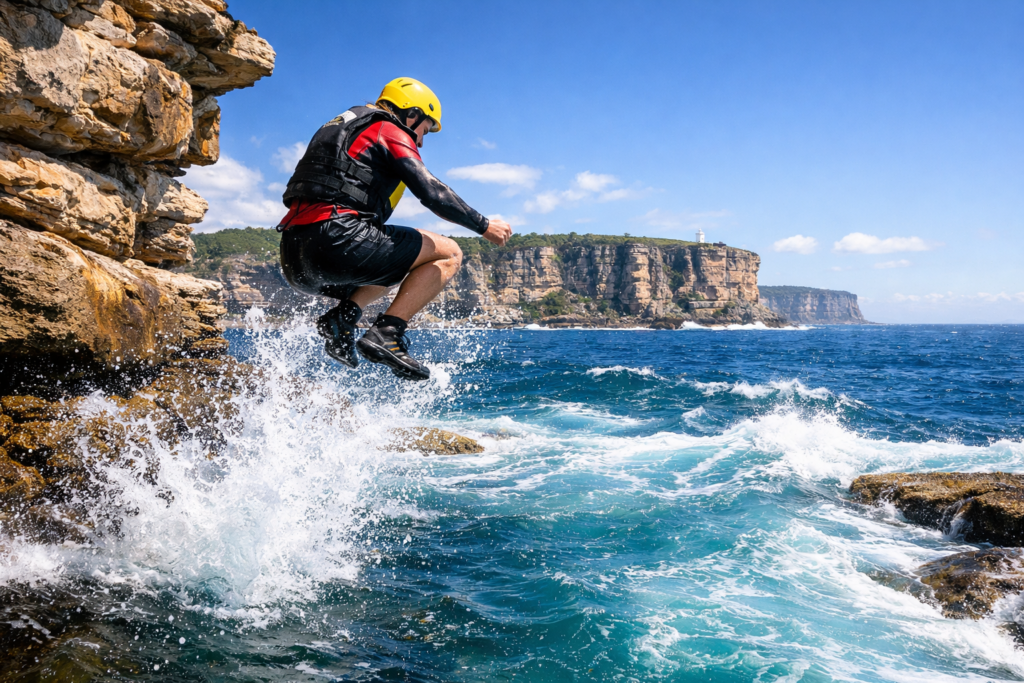
Coasteering is the activity of moving along a tidal coastline without a boat, using a combination of swimming, climbing, scrambling, and jumping. It’s about using the natural features of the rocky shore as your route. The term originated in the UK but finds a perfect home in the rugged, complex sandstone coastlines of New South Wales.
A Typical Sydney Coasteering Adventure Involves:
- Scrambling: Using hands and feet to climb over rocky outcrops and boulders.
- Swimming: Traversing deep channels, gullies, and between rock platforms.
- Jumping: Leaping from safe heights (2m to 10m+) into deep, clear water pools.
- Exploring: Investigating sea caves, surge channels, and hidden tidal pools.
- Wave Riding: Letting the surge of waves help propel you through natural features (safely and at the right time).
Why it’s the PERFECT Hidden Sydney Activity:
- It’s Unseen: It happens away from beaches, on the wild, inaccessible stretches between them.
- It’s Dynamic: The route changes with every tide, swell, and season. No two coasteering trips are alike.
- It’s Immersive: You experience the power, beauty, and wildlife of the ocean intimately.
- It’s a Full-Body Workout: You’ll use muscles you forgot you had, all while having too much fun to notice.
Part 2: Why Sydney’s Coastline is a Coasteering Paradise
Sydney’s geology is its destiny for coasteering. The Triassic-era sandstone that forms our cliffs is both grippy and sculpted into phenomenal features by millennia of wind and wave action.
Key Natural Features That Create the Playground:
- Surge Channels: Deep, narrow gullies where water rushes in and out with the swell. Perfect for swimming and “surge rides.”
- Rock Platforms: Flat areas that provide routes for scrambling and bases for jumps.
- Tidal Pools: Isolated, deep pools carved into the platform, often accessible only at low tide.
- Sea Caves & Overhangs: Formed by weaker rock eroding, offering thrilling exploration.
- Blowholes & Spouts: Where water is forced upwards through holes—best observed from a safe distance!
The Best Conditions for a Sydney Coasteering Adventure:
- Tide: A low and incoming tide is ideal. Low tide exposes more rock to scramble on, and the incoming tide ensures water levels in pools and channels are rising, not stranding you.
- Swell: A small, consistent swell (under 1.5m) is perfect. It creates fun surge without being dangerous. Avoid large swell forecasts.
- Wind: Light offshore winds (winds blowing from the land out to sea) create calmer water conditions near the rocks.
- Time of Day: Start early morning for calm conditions and to have the coastline to yourself.
Part 3: Sydney’s Premier Secret Coasteering Location: The North Head Traverse
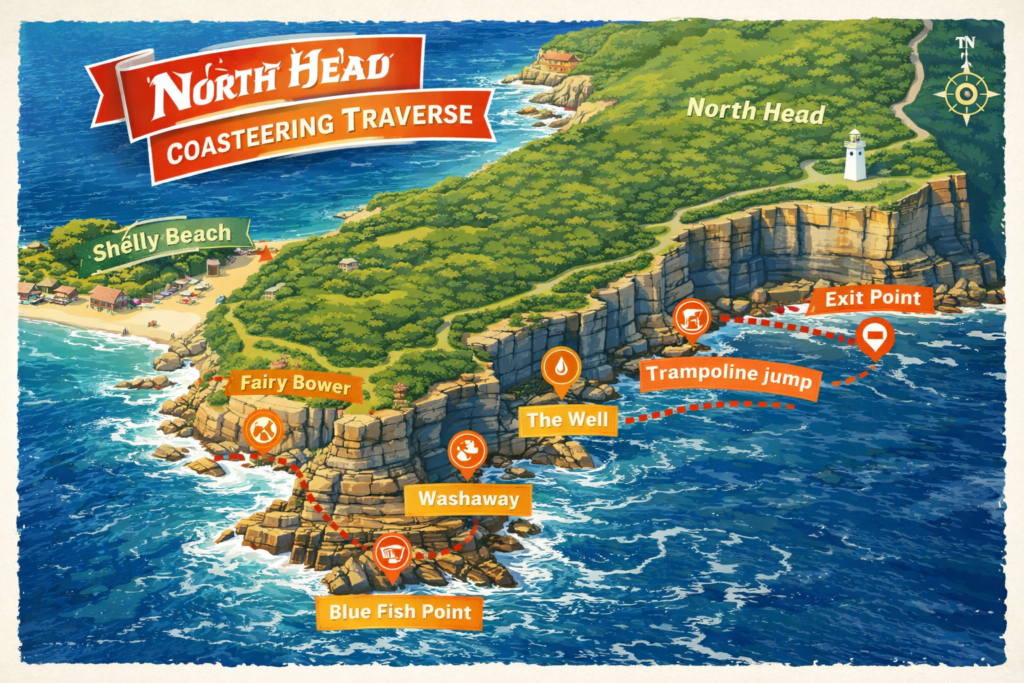
While we won’t geotag every fragile spot, one of the most iconic and accessible coasteering routes for experienced adventurers is the North Head Traverse in the Sydney Harbour National Park. This is a committing, full-day adventure requiring fitness, planning, and appropriate gear.
Disclaimer: This is a guide for informational purposes. This activity carries inherent risks of injury or death. You are responsible for your own safety, assessing conditions, and skills. If in doubt, go with a certified guide.
The Route: From Shelly Beach to Blue Fish Point
Distance: ~4km of coastline (5-7 hours)
Grade: Difficult. Requires confident swimming in ocean swell, climbing, and jumps up to 8m.
Stage-by-Stage Breakdown:
1. Shelly Beach to Fairy Bower Pool:
- Terrain: Easy rock platforms and short swims. A warm-up section.
- Highlights: The beautiful underwater marine life of the Cabbage Tree Bay Aquatic Reserve. Look for blue gropers!
- Jump Option: The famous Fairy Bower “rock shelf” jump (approx. 4m).
2. Fairy Bower to the Washaway (The First Commitment):
- Terrain: The scrambling becomes more involved. You’ll reach “The Washaway,” a deep channel that must be swum across. This is your point of no return.
- Key Safety Note: Assess the swim here. If the surge is too strong, you must turn back.
3. The Washaway to The Well (The Heart of the Adventure):
- Terrain: A stunning series of water-worn platforms, deep blue pools, and short climbs.
- Highlights: “The Well,” a breathtaking, perfectly rectangular tidal pool that feels like a natural infinity pool on the edge of the ocean.
- Jump Options: Multiple jumps from 3m to 6m in this section.
4. The Well to Blue Fish Point (The Grand Finale):
- Terrain: The most exposed and spectacular section. Involves traversing above deep water and the final exit climb.
- The Big One: The legendary “Trampoline” jump (approx. 8m) from a dramatic overhang into a deep, swirling pool.
- Exit: A careful, non-technical but exposed climb up a gully to the cliff top at Blue Fish Point. From here, it’s a bushwalk back to civilisation.
Looking for the right gear to tackle this adventure? The right equipment is non-negotiable for safety and enjoyment. We recommend checking out the Adventure Kit Bundle from our partners at Summit Seekers. Click here to see their curated coasteering kit— featuring grip-optimised wetsuit boots, protective helmets, and durable waterproof bags, all tested on the Sydney coast.
Part 4: The Non-Negotiables: Safety, Gear & Preparation
Coasteering is not a casual beach day. Respecting the ocean is paramount.
The Essential Safety Rules:
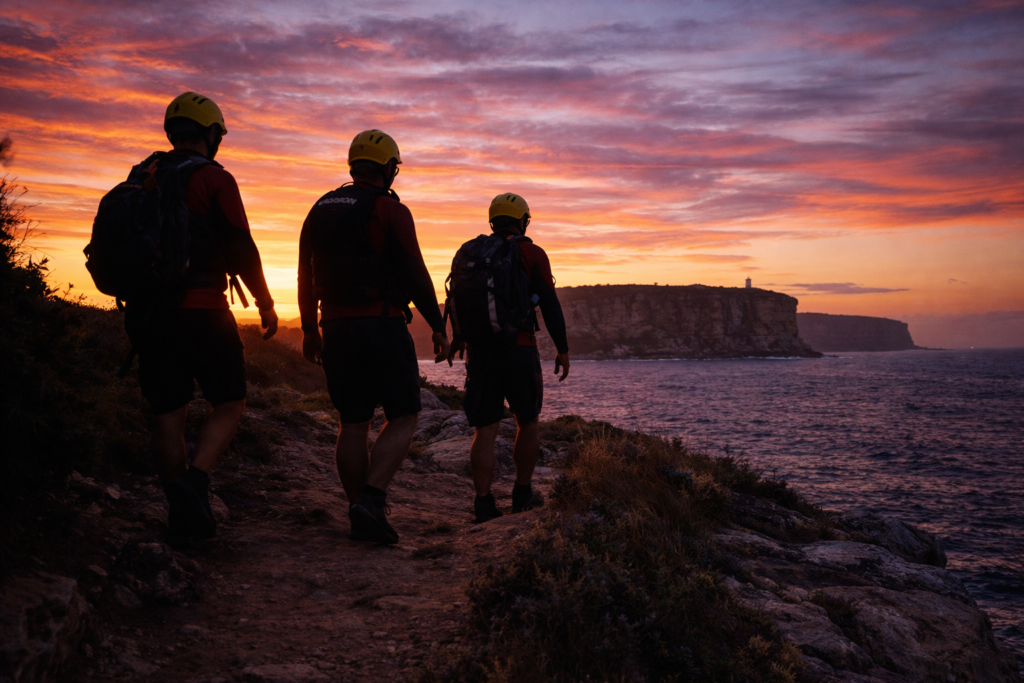
- Never Go Alone: Use the buddy system. A minimum of three people is safer.
- Tell Someone: Leave a detailed trip plan (location, route, expected return time) with someone reliable.
- Check Conditions obsessively: Use BOM Marine Forecast (wind, swell) and Tide Times apps. Do not proceed if conditions are marginal.
- Know Your Exit Points: Always identify your next safe exit before you need it.
- Scout Every Jump: Always enter the water feet first. Check for depth (min. 3x the jump height), submerged objects, and surge pattern.
- The Ocean is Boss: If in doubt, don’t go out. Conditions can change fast.
The Ultimate Coasteering Gear List:
- Footwear: Neoprene wetsuit boots or canyoning shoes with sturdy, grippy soles (e.g., Vibram). No sneakers or reef shoes.
- Protection: A lightweight climbing or watersports helmet is essential against falls and knock.
- Buoyancy & Warmth: A steamer wetsuit (3/2mm or 4/3mm) for insulation and buoyancy. In warmer months, a rash vest and boardshorts over a shorty wetsuit may suffice.
- Dry Bag: A 5-10L waterproof dry bag for phone, keys, first-aid kit, and snacks.
- Other Essentials: High-SPF waterproof sunscreen, zinc, water (2L+), energy snacks, basic first-aid kit, a whistle.
Part 5: Beyond North Head: Other Sydney Coasteering Zones
- The Royal National Park (South Sydney): Areas near Garie Beach and Era Beach offer more remote, committing traverses for the very experienced.
- The Central Coast: Locations like Bouddi National Park provide world-class coasteering with incredible geology.
- Beginner-Friendly Options: The rock platforms at Dee Why Point or Cabbage Tree Bay itself offer fantastic introductory terrain to practice jumps and swims in a more controlled environment.
LSI & Related Keywords Naturally Integrated: ocean rock climbing Sydney, tidal pool exploration, harbour national park adventures, coastal scrambling NSW, sea cave discovery, cliff jumping spots near me, guided canyoning trips Sydney, adventure swimming tours, coastal bouldering, maritime adventure sports.
Dreaming of the adventure but not ready to go solo? Experience the thrill with total peace of mind. Book a certified guided coasteering tour with our trusted partners, Coastal Adventures Sydney. Their expert guides know every secret spot and provide all top-tier safety gear. Limited spots available—secure your adventure date here!
Part 6: The Coasteering Mindset & Environmental Ethics
Coasteering is as much about attitude as it is about action.
Embrace the “Type 2 Fun”: This is the fun that is challenging, sometimes uncomfortable in the moment, but profoundly rewarding in retrospect. You’ll be tired, salty, and maybe a little scared—and you’ll love every minute of it.
Leave No Trace – Coastal Edition:
- Touch Only Sandstone: Avoid fragile coral and weed beds.
- Respect Wildlife: Give nesting birds (like sooty oystercatchers) a wide berth. Look but don’t touch marine life.
- Take All Rubbish: This includes fruit peels.
- No Chalk: Unlike rock climbing, the use of chalk on Sydney’s porous sandstone is frowned upon and can stain.
Frequently Asked Questions (FAQs)
Q: Do I need to be an expert swimmer to go coasteering in Sydney?
A: Yes, you need to be a strong and confident swimmer in open ocean conditions. You should be comfortable swimming 100+ metres in swimwear, be able to tread water for extended periods, and not panic if a wave washes over you. Ocean swimming pools are great training grounds.
Q: Is coasteering legal in Sydney?
A: It exists in a grey area. It is generally permissible in National Parks and public land if you are not damaging the environment or trespassing. However, some specific cliffs may have access restrictions. Always check for signage and respect any closures, especially near defence lands (like parts of North Head).
Q: What is the biggest danger in coasteering?
A: The two primary dangers are unpredictable swell/waves (which can sweep you onto rocks) and falls from height. This is why condition assessment, route choice, and scouting jumps are critical skills. Hypothermia can also be a risk in cooler months without proper gear.
Q: Can I go coasteering if I’ve never done it before?
A: Absolutely, but not on a route like North Head as your first try. Start with a guided tour (see our ad below!) or practice the component skills separately: ocean swimming at a patrolled beach, bouldering at an indoor gym, and small jumps at known safe locations like the Bronte Baths.
Q: What’s the best time of year for coasteering in Sydney?
A: Late Spring to Early Autumn (October to April) offers the warmest water and most reliable weather. However, coasteering can be done year-round with a thicker wetsuit (5/4mm) in winter—the water is rarely that cold, and you’ll have the coast to yourself.
Conclusion: Your Secret Coastline Awaits
Sydney’s true essence isn’t just in its calm harbour vistas, but in the wild, pounding energy of its ocean frontier. Coasteering is the key to unlocking that frontier. It’s a journey that rewards curiosity, fitness, and respect with experiences you simply cannot get any other way: the weightless flight of a perfectly executed jump, the awe of discovering a hidden grotto, the camaraderie of solving a natural puzzle with friends, and the deep fatigue of a day spent fully engaged with the elements.
This guide has given you the map—the knowledge of what coasteering is, where its playgrounds lie, and how to approach them with safety and reverence. The next step is yours. Train your skills, watch the forecasts, gather your trusted buddies, and pack your dry bag. A secret Sydney, far from the tourist trails, is waiting to be traversed, one swim, scramble, and jump at a time.
Ready to take the leap? Start planning. And when you return, salt in your hair and stories in your eyes, you’ll know you’ve experienced one of the greatest hidden adventures this coastal city has to offer.