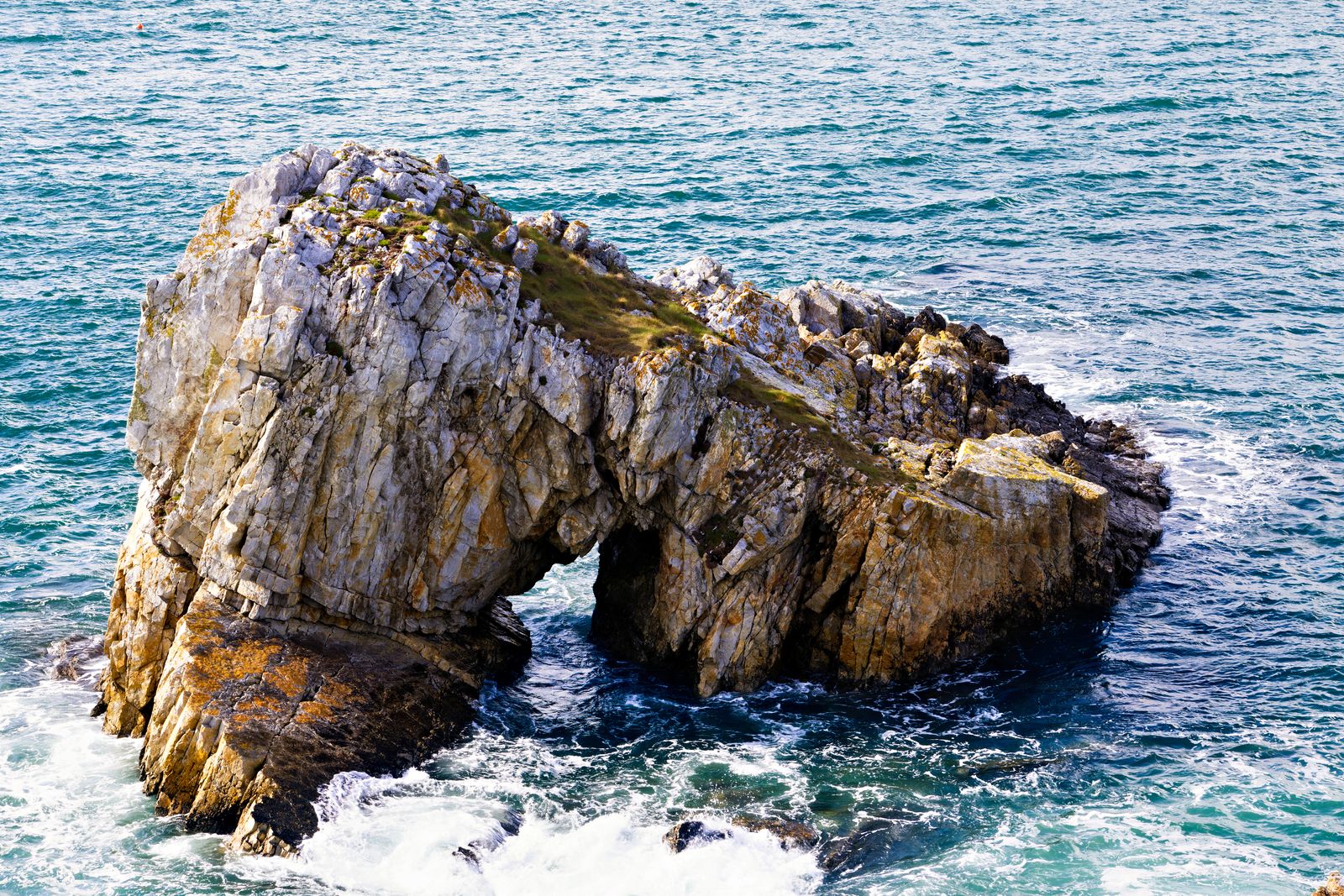
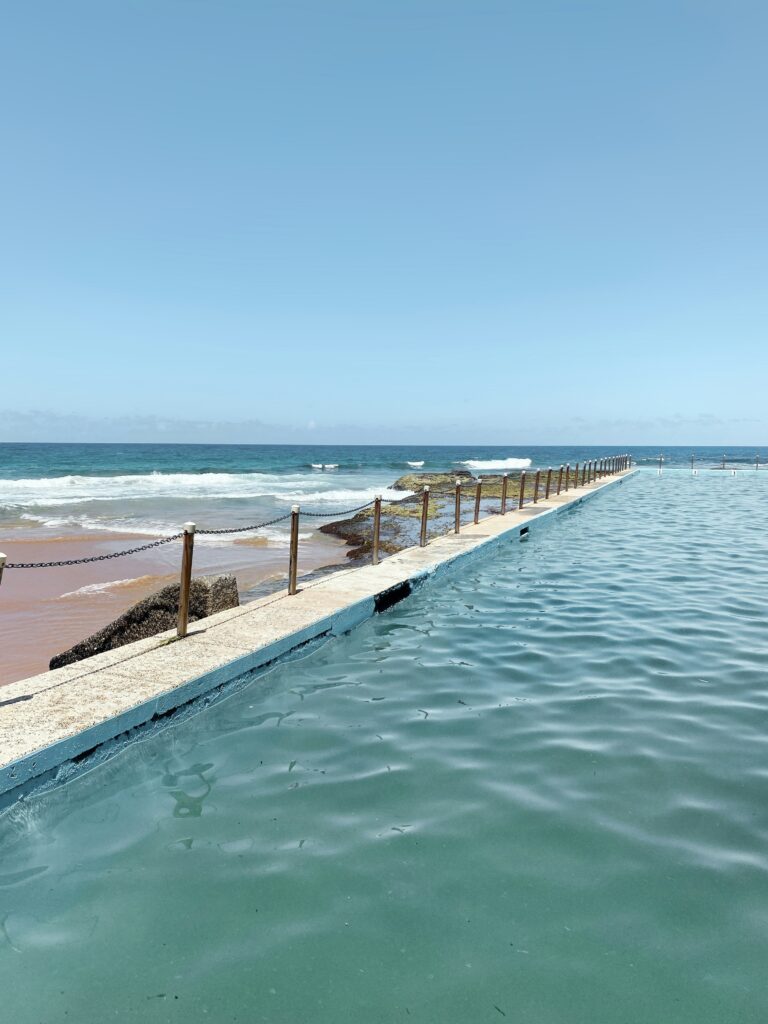
Imagine standing barefoot on warm sandstone, the salty ocean breeze in your hair, and a natural swimming pool carved by thousands of years of crashing waves right at your feet. No crowds. No entry fee. No chlorine. Just you, the Pacific Ocean, and one of Sydney’s most underrated coastal treasures.
Welcome to Cronulla’s rock pools — and trust us, once you find them, you’ll wonder why you ever bothered with busy public pools.
Whether you’re a local who somehow hasn’t explored this stretch of coastline properly, or a visitor who wants to go beyond Bondi’s famous Icebergs, this guide is your personal tour through every rock pool worth knowing in Cronulla. We’ll tell you exactly where to go, how to get there, the best time to visit, what to bring, and what to watch out for.
Let’s lace up those water shoes and explore.
Why Cronulla’s Rock Pools Are Special
Cronulla sits at the southern tip of Sydney’s coastline, and that geography gives it something most northern beaches simply don’t have: dramatic, exposed headlands shaped by raw Pacific swells for millions of years.
The result? A series of naturally carved rock pools that range from shallow, toddler-friendly wading areas to deep, crystal-clear swimming pools where you can snorkel over schools of fish. The sandstone rocks here glow golden in the morning light, and the contrast with the deep blue water makes for scenery that honestly looks like it belongs in a travel magazine.
What makes Cronulla’s rock pools extra special compared to, say, those at Coogee or Manly?
Fewer crowds. Because Cronulla is further from the CBD and requires a bit more effort to reach, you get the same stunning coastal scenery with maybe one-tenth of the people.
Better marine life. The southern exposure and proximity to the Royal National Park means cleaner water and a healthier marine ecosystem. We’re talking blue-ringed octopus (look but don’t touch!), sea stars, anemones, and clouds of tiny fish.
The whole vibe. Cronulla has a laid-back, genuine local feel that’s harder to find in Sydney’s more touristy pockets. Rock pooling here feels like a real discovery, not a tourist activity.
Your Complete Rock Pool Guide: Location by Location
1. Shelly Beach Rock Pool — The Crowd Favourite (That’s Not Actually Crowded)
Best for: Families, beginners, anyone who wants a safe, sheltered swim
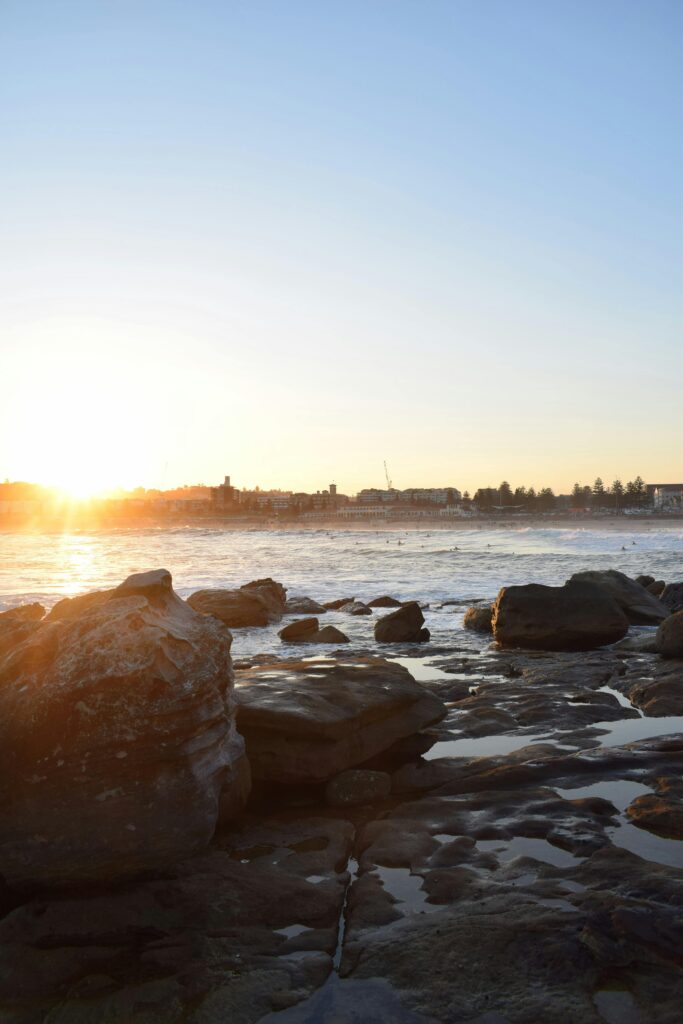
Let’s start with the one that most locals already know — and still love. Shelly Beach rock pool sits on the northern end of Cronulla Beach, just a short walk from the main strip. It’s one of those places that feels instantly comfortable, like you’ve been coming here your whole life.
The pool itself is naturally formed but has some man-made reinforcement on one side to create a more defined swimming area. The water is calm, clear, and usually protected from the bigger swells that hit the main beach. On a sunny weekday morning, you might arrive to find just a handful of older locals doing their daily laps.
The experience: Walk down the coastal path from Cronulla Beach’s northern end, and you’ll smell the salt before you see the pool. The approach takes you along low sandstone platforms where, at low tide, you can already start spotting hermit crabs, tiny gobies, and sea urchins tucked into rock crevices. Kids go absolutely wild here — there’s so much to discover before you even get to the swimming part.
The pool is deepest toward the ocean side (roughly chest-deep on an adult at high tide) and shallower near the rocks, making it naturally tiered for different abilities.
Insider tip: Come at mid-tide on a calm day. Too low and the pool gets weedy and shallow. Too high during rough swell and waves can wash over the edges. That sweet spot in between? Perfection.
Practical info:
- Address: Northern end of Cronulla Beach, off Mitchell Road
- Parking: Paid parking available on Gerrale Street or free street parking 10-minute walk away
- Facilities: Nearby toilets and showers, cafés within 5-minute walk
- Accessibility: The walk down to the rocks is uneven — not suitable for wheelchairs or prams
2. Cronulla Point Rock Pools — The Snorkeller’s Secret
Best for: Snorkelling, marine life spotting, adventurous swimmers
Now we’re getting into hidden gem territory. Most visitors to Cronulla never make it around to the headland at Cronulla Point, and that’s their loss — and your gain.
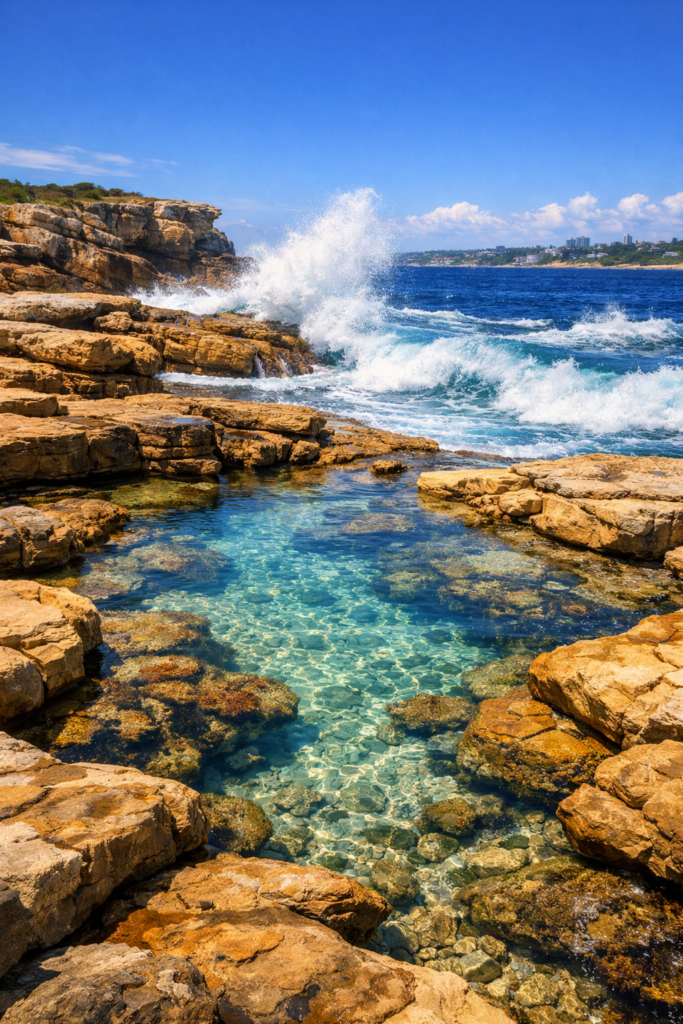
The rock platforms here are extensive, stretching for hundreds of metres along the headland. At low tide, a series of interconnected pools emerge from the receding water, each one like its own miniature ocean world. Some are no bigger than a bathtub. Others are wide, waist-deep pools where you can float and look down at the rocks below.
The experience: Start from the southern end of Cronulla Beach and walk around the headland. The path isn’t signposted, which adds to the sense of exploration. You’ll be scrambling slightly over rocks (wear shoes with grip), but it’s nothing technical — just pay attention and take your time.
As you round the headland, the noise of the beach fades behind you and the rock platforms open up ahead. This is where it gets special. With a snorkel and mask, this stretch of coast is extraordinary. The water clarity is exceptional on calm days, and you’ll encounter sea weeds swaying in the current, schools of luderick (also called blackfish), and if you’re lucky, a blue-ringed octopus sheltering under a ledge.
A word on blue-ringed octopus: They are real and they are here. They’re also small (the size of a golf ball), beautiful, and genuinely dangerous. Never pick up shells or rocks without looking first. Never put your hand anywhere you can’t see. With basic awareness, they’re not a problem — but it’s worth knowing they exist.
Insider tip: The pool around 150 metres past the headland point has an underwater ledge system that absolutely teems with small fish. Drop in with a mask and watch them swirl around you.
Practical info:
- Access: Walk south along Cronulla Beach, then around the headland — approximately 15-20 minutes from the main beach car park
- Tide requirements: Low to mid-tide is essential. High tide covers most pools
- Snorkelling gear: There’s no hire available nearby — bring your own or pick it up from a Cronulla dive shop before your visit
- Best time of year: Summer (December-February) for warmth, but autumn has exceptional water clarity
3. Salmon Haul Bay Rock Pools — The Hidden Gem You’ll Want to Keep to Yourself
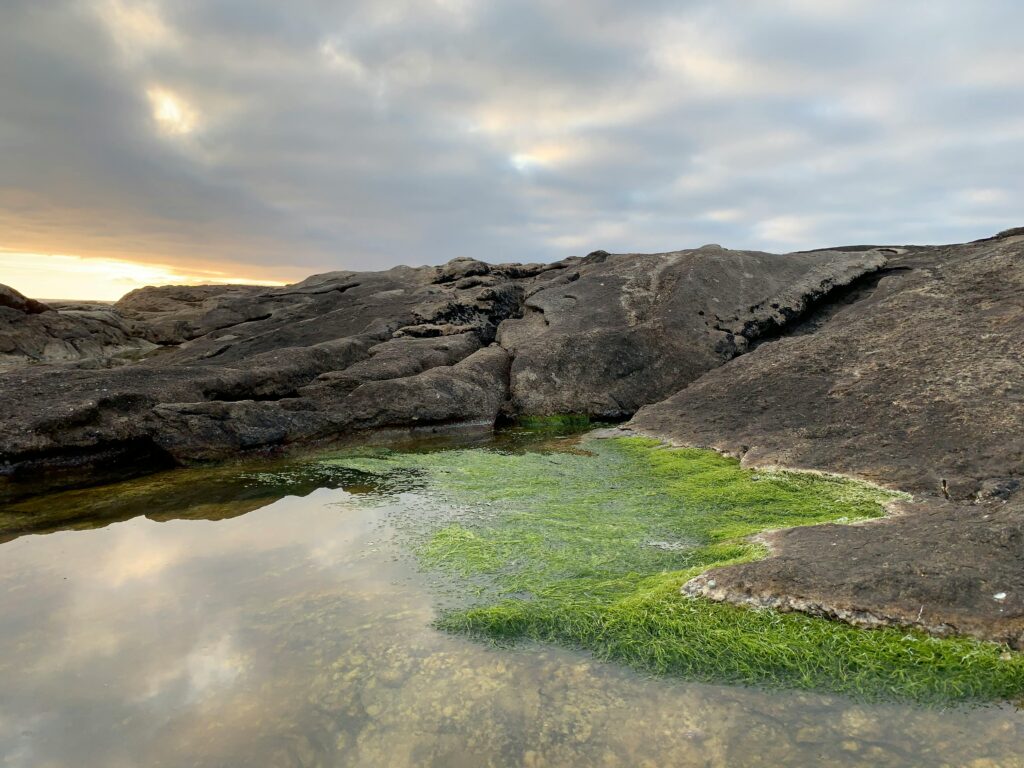
Best for: Solitude seekers, photography, experienced explorers
If Shelly Beach is the friendly introduction and Cronulla Point is the intermediate level, Salmon Haul Bay is the advanced course — and the reward for making the effort is something genuinely spectacular.
Salmon Haul Bay sits within the Bate Bay area, further south past Cronulla. Getting there requires either a longer coastal walk or a drive to Kurnell, but either way, you’ll be glad you came. The bay itself is partially sheltered, and the rock platforms on its northern edge form a series of pools that feel completely wild and untouched.
The experience: The pools here are deeper and more dramatic than anywhere else in the Cronulla area. Some are large enough to genuinely swim laps in, naturally carved into the sandstone shelf. The rock formations are extraordinary — layers of ancient sandstone, shot through with different coloured minerals, dropping into pools of water that shifts between turquoise and deep navy depending on the light and depth.
This is a place for quiet contemplation as much as swimming. Bring a towel, find a flat rock in the sun, and spend a morning doing absolutely nothing except watching the ocean do what it does.
Wildlife: This is prime territory for sea eagles — look up as often as you look down. Pelicans cruise overhead, cormorants dive from the rocks, and on very lucky mornings, dolphins have been spotted just beyond the rock platforms.
Insider tip: This spot is essentially unknown outside of local fishing circles and a handful of coastal walkers. Go on a weekday and there’s a real chance you’ll have it entirely to yourself.
Practical info:
- Access from Cronulla: Approximately 4km south — drive to Kurnell and access from the Kurnell side, or walk the full coastal track (allow 1.5 hours one way)
- No facilities: Bring everything you need — water, food, sunscreen, a first aid kit
- Difficulty: Moderate — some uneven terrain and rock scrambling required
- Tides: Absolutely essential to check before visiting. This spot can be cut off during high tide
4. Boat Harbour Rock Pools — The Family Adventure Pool
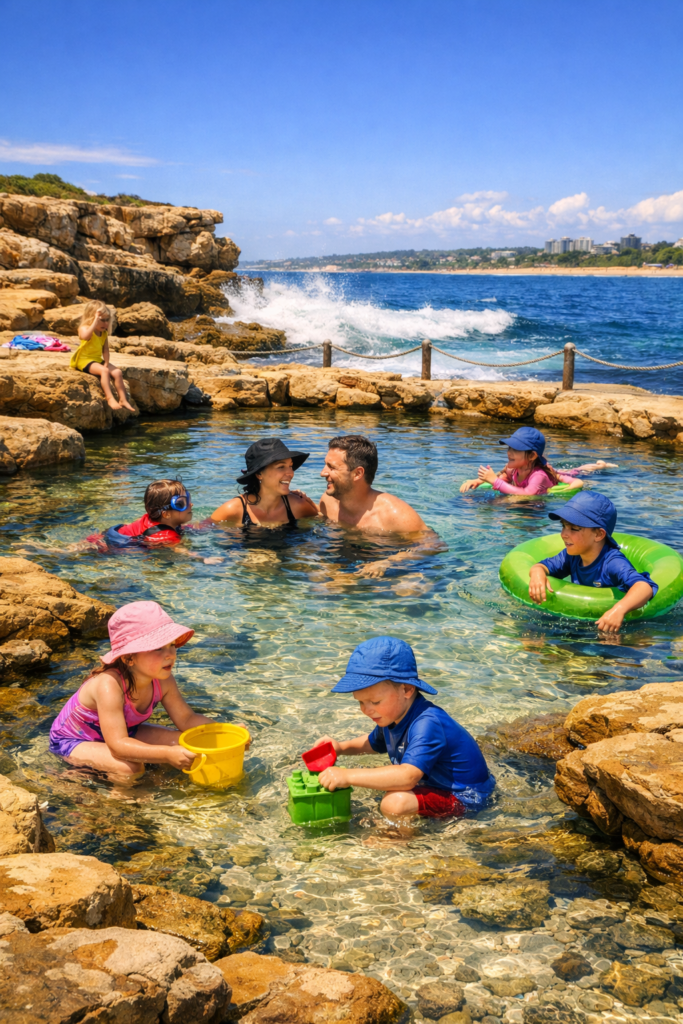
Best for: Children and families, first-time rock poolers, a full day out
For families with young children who want something more accessible but still genuinely exciting, Boat Harbour in Cronulla ticks every box. The rock pool here is larger and more defined than many natural pools in the area, and the surrounding rock platforms are flat enough for little ones to explore safely.
The experience: The pool at Boat Harbour sits behind a natural rock barrier that takes the brunt of the ocean swell, keeping the interior calm even when conditions outside are moderate. The result is a pool that’s almost always swimmable, with enough depth for adults to swim properly and shallow edges where smaller children can wade.
The surrounding rock platform at low tide becomes a treasure hunt of the best kind. Sea anemones that close when you touch them (gently!), turban snails moving slowly across the rock, tiny rock pools within pools hosting their own miniature ecosystems. Bring a magnifying glass and small children will be occupied for hours.
The café situation: This matters because a good rock pool session works up an appetite. There’s a café at Boat Harbour that’s become a local institution — nothing fancy, but they do great fish and chips and the kind of flat whites that justify the drive. Sit outside with a view of the harbour and the day feels complete.
Insider tip: Low tide on a weekend morning brings local families and is genuinely wonderful — a real slice of Sydney coastal life. But if you prefer quiet, aim for low tide on a weekday.
Practical info:
- Address: Boat Harbour, off Kurnell Road, Cronulla
- Parking: Free parking available at the boat ramp car park
- Facilities: Toilets, café, flat grassy area suitable for picnics
- Accessibility: Reasonable — flat car park and path to the pool edge, though the rocks themselves are uneven
5. The Basin — Cronulla’s Little-Known Tidal Pool
Best for: Experienced swimmers, those who want genuine ocean swimming in a protected setting
Not to be confused with The Basin in Pittwater, Cronulla’s version is a naturally occurring tidal pool on the southern headland that most visitors completely overlook. It’s deeper and more exposed than the other pools on this list, which means it’s not suitable for young children or nervous swimmers — but for confident swimmers, it’s extraordinary.
The experience: At high tide, The Basin fills completely with fresh ocean water. As the tide drops, it becomes a self-contained pool that retains its water while the surrounding rocks emerge. The water is exceptionally clear because it gets completely refreshed with every tidal cycle, and the depth means you can genuinely dive and swim rather than just wade.
On a good day, the combination of the pool’s natural shape and the surrounding rock formations creates something that looks genuinely otherworldly — the kind of place you want to photograph from every angle.
Insider tip: This pool is known to local surf lifesavers and open water swimmers who use it for training. If you arrive and find a group of serious swimmers already in there, you’re in the right place and you’ve found the real hidden gem.
Practical info:
- Access: Via the coastal walk from Cronulla’s southern beach — allow 25-30 minutes of walking
- Tide: Best at mid to high tide — too low and it becomes too shallow for proper swimming
- Not suitable for: Children under 10, non-swimmers, anyone uncomfortable with deeper water
Practical Planning: Everything You Need to Know
When to Visit
Best season: Year-round, but each season offers something different.
Summer (December–February): Warmest water (around 22–24°C), longest daylight hours, most marine life activity. Crowds are at their peak on weekends but still manageable compared to northern beaches.
Autumn (March–May): Arguably the best time for experienced rock poolers. Water is still warm from summer, clarity is exceptional, and crowds drop significantly after Easter.
Winter (June–August): Cold but not miserable (water sits around 17°C). The light is extraordinary for photography, storms can make the scenery dramatic, and marine life including humpback whales can be spotted offshore. Swimming in wetsuits is popular with locals.
Spring (September–November): Water temperature starts climbing, wildflowers appear on the headland walks, and the crowds haven’t yet arrived for summer.
Tide Timing — This Is Critical
Rock pooling is fundamentally a tide-dependent activity. Get this wrong and you’ll either find everything underwater or have a disappointing shallow paddle. Get it right and you’ll have access to one of nature’s most remarkable little ecosystems.
The golden window: 1-2 hours before low tide through to 1 hour after low tide. This is when pools are most accessible, water is clearest, and marine life is most visible.
How to check: The Bureau of Meteorology (BOM) website provides free, accurate tide predictions for Cronulla. Search for “BOM tide times Cronulla” and bookmark it. Check before every visit — tides shift by roughly 50 minutes each day.
Spring tides vs neap tides: Around new moon and full moon, tides are more extreme (spring tides), which means lower lows and higher highs. The lowest low tides reveal parts of the rock platform that are almost never accessible — and these are the absolute best times to rock pool if you can align your visit.
What to Wear and Bring
Footwear: Water shoes or old joggers are non-negotiable for rock pooling. Sandstone is grippy when dry but treacherous when wet. Thongs (flip-flops) are genuinely dangerous — don’t do it. Those cheap rubber water shoes you can find for $20 at a surf shop or Kmart are completely adequate.
Sun protection: The Sydney sun reflecting off white sandstone and water is intense, even on mild days. SPF50+ sunscreen (reapplied every 90 minutes), a wide-brimmed hat, and UV-protective swimwear for children are essential.
What to bring:
- Water (more than you think you need)
- Snacks
- Sunscreen and hat
- Waterproof phone case or leave your phone in the car
- A light rash vest or wetsuit top for extended snorkelling
- Snorkel and mask if you have them
- A dry bag for valuables
- Small first aid kit (bandaids, antiseptic — cuts from rock edges happen)
What to leave at home:
- Anything irreplaceable — the rocks and ocean care nothing for your good camera
- Inflatable toys — strong currents beyond the pools can make these dangerous
- Loud speakers — this is a nature experience, not a beach party
Getting There
By train: Cronulla is the only Sydney beach directly accessible by train — the T4 Eastern Suburbs & Illawarra line runs directly to Cronulla station, about a 5-minute walk from the main beach. From Central, the trip takes approximately 55 minutes.
By car: Take the Princes Highway south, then follow signs to Cronulla. The trip from Sydney CBD takes 45-60 minutes depending on traffic.
Parking: Cronulla has several paid car parks near the beach. Weekends in summer fill up quickly — arrive before 9am or take the train.
From the station: Most rock pool locations are accessible on foot from Cronulla station within 10-25 minutes.
Rock Pooling Etiquette and Safety
The Golden Rules
Look, don’t touch — or if you touch, be gentle and put back exactly where you found it. Marine creatures living in rock pools are delicate and adapted to very specific conditions. Turning rocks over and not replacing them, or removing creatures from pools, disrupts these ecosystems. Rock pools near cities have already faced enormous pressure — be part of the solution, not the problem.
Never collect. In NSW, removing marine life from rock pools is illegal in many areas and is subject to significant fines. Beyond the legal issue, the ethical case is clear: leave it for the next visitor to enjoy.
Watch the ocean, always. Rogue waves — unexpectedly large waves that arrive without warning — are the primary danger at Sydney rock pools. Never turn your back on the ocean. Never stand on rocks at the ocean’s edge during swell or rough conditions. If a wave is coming and you can’t get back, crouch low and hold on rather than trying to run.
Check conditions before you go. Surf Life Saving NSW’s website and app provide beach conditions and alerts. If there’s a warning in place for rough conditions, postpone your rock pool visit.
Wear your shoes. Sea urchin spines are extraordinarily painful and difficult to remove. Blue-ringed octopus bites are life-threatening medical emergencies. Proper footwear minimises both risks dramatically.
Take your rubbish home. Every piece of plastic and rubbish left near rock pools eventually ends up in the ocean. The rock pools at Cronulla are beautiful because people who came before you cared about them.
Rock Pooling With Kids: A Guided Experience
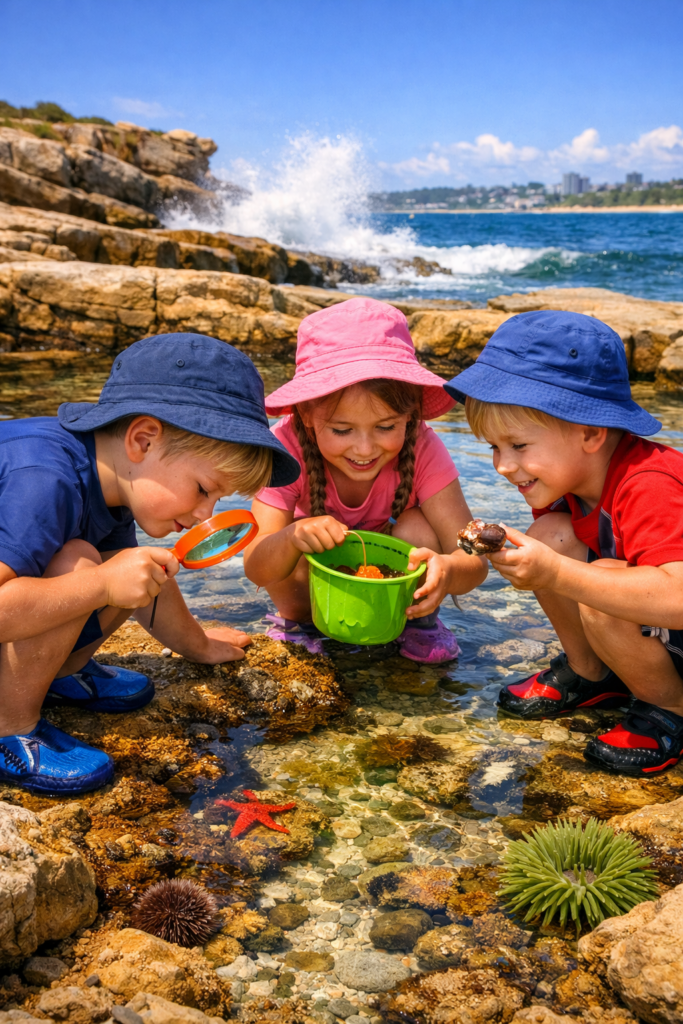
Here’s a simple structure for making a rock pool trip genuinely magical for children:
Start with the hunt. Before anyone gets wet, spend 15 minutes on the dry rock platforms looking for life. Turn over rocks carefully (and replace them), peer into crevices, crouch down and look at the rock surface at eye level. Challenge kids to find five different creatures before anyone gets in the water.
Give them a reference point. A simple laminated guide to Sydney rock pool creatures (available from many newsagencies and outdoor stores, or printable free from the Australian Museum website) transforms a swim into a proper scientific expedition. Kids who know what they’re looking for — and can name what they find — are engaged at a completely different level.
Let them lead. Once they’ve found something interesting, follow their curiosity rather than directing it. The child who just discovered that an anemone closes when touched will happily investigate that single phenomenon for 20 minutes, and will remember it for 20 years.
The pool swim as the reward. After the exploring, the swim becomes a celebration rather than the whole point. Kids who’ve spent time carefully observing the pool’s residents swim in it differently — more gently, more curiously.
Beyond the Rock Pools: Making a Full Day of It
The rock pools are the centrepiece, but Cronulla offers enough to fill an entire day comfortably.
Morning: Rock pools at low tide (check times in advance) Late morning: Coffee and cake at one of Cronulla’s excellent café strip options — the stretch along Cronulla Street has improved dramatically in recent years Lunch: Fish and chips on the beach, or a proper sit-down meal at one of the restaurants along the esplanade Afternoon: Walk the full Cronulla to Bundeena ferry coastal route for views, or if you’re with children, Hungry Point Reserve has excellent playground facilities with ocean views Late afternoon: Sunset from the headland above the southern rock pools — this is genuinely one of Sydney’s great free spectacles
Frequently Asked Questions
Are the rock pools safe for young children? Shelly Beach pool and Boat Harbour pool are the best options for young children — both have calm, defined swimming areas and shallow edges. Always supervise children closely, apply sun protection, and ensure they wear water shoes.
Can I snorkel at Cronulla rock pools? Absolutely — the Cronulla Point pools are particularly good for snorkelling. Bring your own equipment as there’s no hire available locally.
Do I need a permit or pay to access rock pools? No permits, no entry fees. The rock platforms and natural pools are publicly accessible coastal land.
What’s the water temperature like? Summer water temperature sits around 22-24°C — comfortable for swimming without a wetsuit. Winter drops to around 17°C, which most adults find manageable for short swims; a wetsuit top makes longer sessions much more comfortable.
Are there lifeguards at the rock pools? The main Cronulla Beach is patrolled by surf lifesavers during daylight hours in summer. The rock pool areas themselves are unpatrolled. Always swim with a companion and stay within your abilities.
When is the best time to see marine life? Early morning at low tide in the warmer months. Marine creatures are more active in the morning, and lower light reduces glare on the water, making observation much easier.
Final Thoughts: Your Cronulla Rock Pool Adventure Awaits
Sydney’s best experiences are rarely the ones listed in every travel guide. They’re the ones locals love, the ones that require a bit of effort and local knowledge to find, the ones where the reward matches the journey.
Cronulla’s rock pools are exactly that kind of experience.
They won’t dazzle you with neon signs or queue management systems or a gift shop at the exit. They’ll dazzle you with something that no amount of city development can manufacture: the raw, patient, extraordinary work of the Pacific Ocean sculpting ancient stone into something beautiful.
Go at low tide. Wear your water shoes. Leave your rubbish at home. Look before you put your hands anywhere. And then let yourself just be present in one of Sydney’s finest natural spaces — one that, remarkably, most people drive right past without ever knowing it’s there.
That’s the whole point of hidden gems.
Have you visited Cronulla’s rock pools? We’d love to hear about your experience — drop a comment below and share your favourite spot. And if you found this guide helpful, share it with someone who needs a reason to get off the couch this weekend.
Related Articles You Might Enjoy:
- Secret Picnic Spots in Lane Cove
- Dog Friendly Walks in Centennial Park Sydney
- Hidden Cafes in Surry Hills Sydney
Sydney Hidden Gems is a local guide dedicated to uncovering the experiences that make Sydney extraordinary — beyond the postcards and the tourist trail.