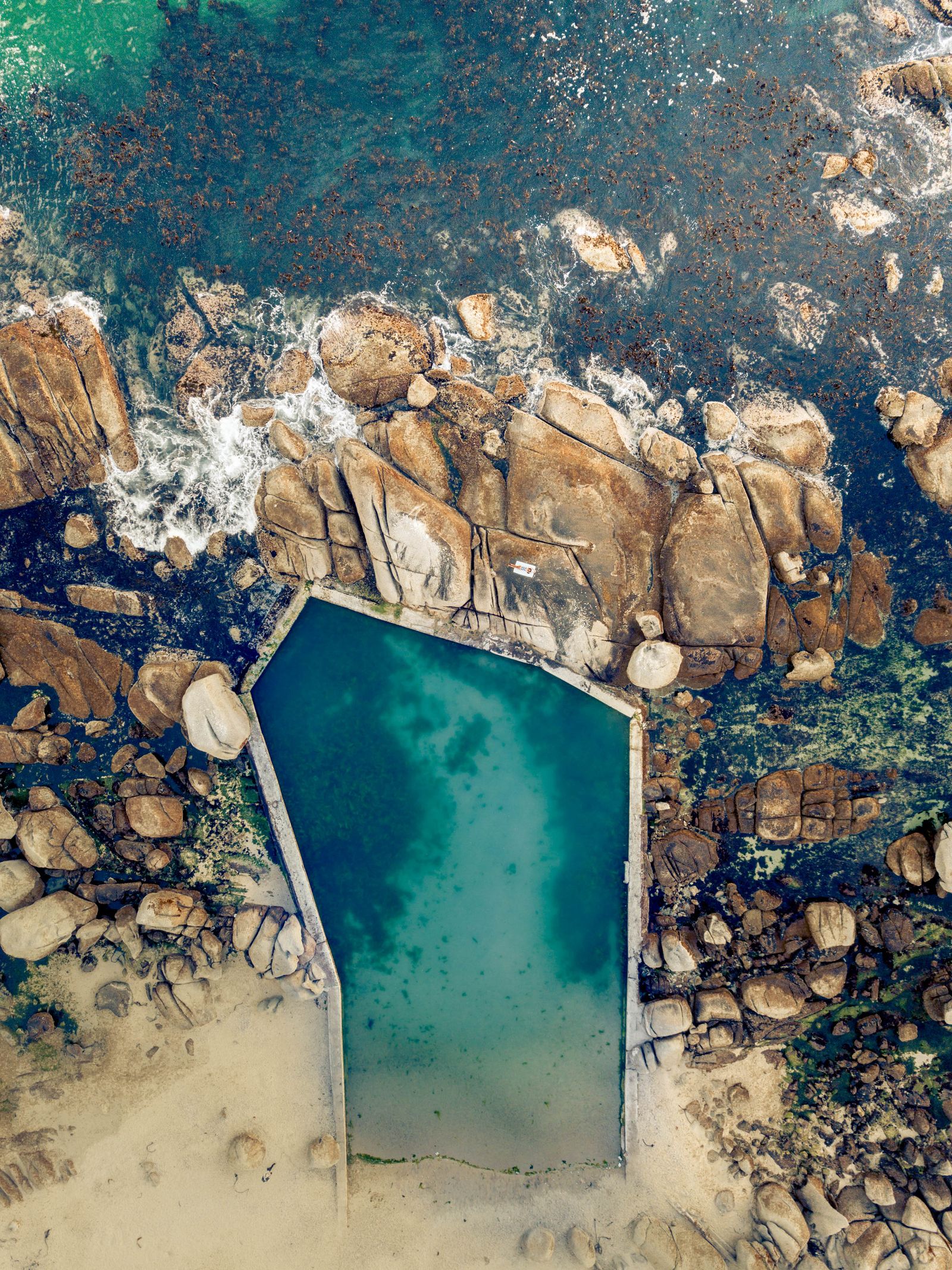
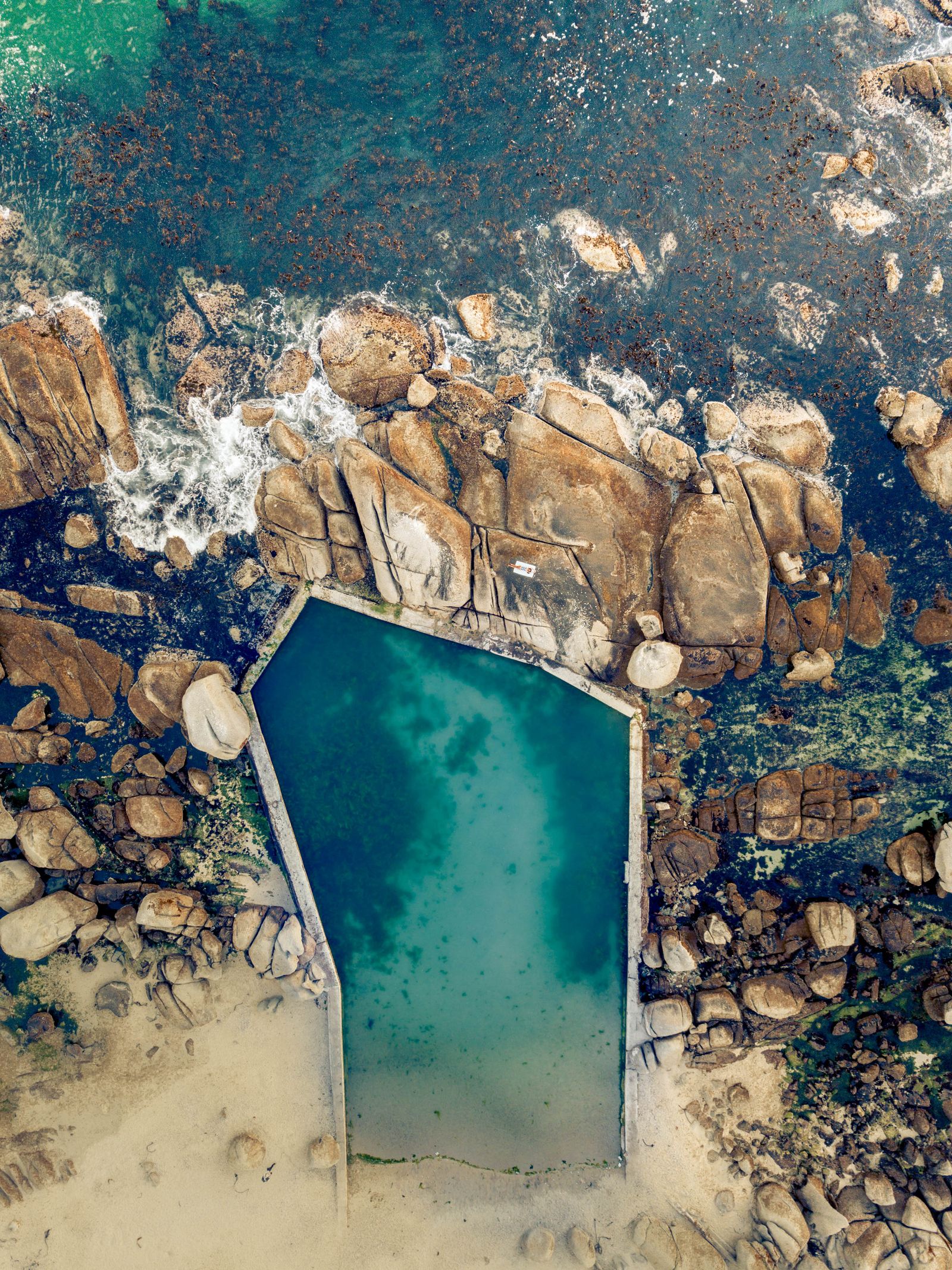
Sydney’s best rock pools include Mahon Pool in Maroubra, Wylies Baths and Ross Jones Memorial Pool in Coogee, Fairy Bower Pool in Manly, North Curl Curl Rock Pool, and the tidal pools around Cronulla and Bronte. Most are free, fed by the ocean, and best visited around mid to high tide. Nearly all of them sit along the coastal walk between major beaches, so it’s easy to visit two or three in a single trip.
Sydney’s ocean pools are one of the city’s most underrated features — dozens of them sit carved into the rocks along the coastline, refilled by the tide, free to use, and far less crowded than the beaches next to them. Some are engineered ocean baths with lap lanes; others are entirely natural rock formations that only fill at certain tides. This guide covers nine worth seeking out, what makes each one different, and how tides affect your visit.
Mahon Pool, Maroubra
Mahon Pool sits at the northern end of Maroubra Beach, carved into the headland rather than built up with concrete walls like a formal ocean bath. At high tide, waves wash directly over the rock ledge into the pool, which locals treat as half the appeal — it’s one of the more dramatic ocean pools in Sydney to swim in during a moderate swell. At low tide it’s calmer and better suited to families.
- Where: northern end of Maroubra Beach
- Best tide: mid to high tide for the full wave-wash effect; low tide for a calmer swim
- Getting there: bus to Maroubra Junction, then a coastal walk north
- Facilities: no cafe on-site; Maroubra Beach has cafes and toilets nearby
Wylies Baths, Coogee
Wylies is one of Sydney’s most photographed ocean pools, built into the rocks at the southern end of Coogee Beach in 1907. It’s a genuine heritage site as much as a swimming spot, with timber decking, a kiosk, and lap lanes that draw a mix of serious swimmers and tourists. Unlike Mahon Pool, Wylies charges a small entry fee, which keeps it noticeably quieter than the free beach right next to it.
- Where: southern end of Coogee Beach
- Best tide: swimmable at all tides; refills constantly from the ocean
- Getting there: bus from the city to Coogee Beach, then a short walk south
- Facilities: kiosk, change rooms, small entry fee applies
Ross Jones Memorial Pool, Coogee
Right next to Wylies but free to use, Ross Jones Memorial Pool is smaller, shallower, and calmer — genuinely one of the safest ocean pools in Sydney for young kids. Because it’s overshadowed by its famous neighbour, it stays noticeably quieter even on a busy Coogee weekend.
- Where: southern end of Coogee Beach, beside Wylies Baths
- Best tide: swimmable at all tides
- Getting there: same access point as Wylies Baths
- Facilities: none on-site; Coogee’s cafes are a short walk away
Fairy Bower Pool, Manly
Tucked along the coastal walk between Manly and Shelly Beach, Fairy Bower is a small natural rock pool that most people walking the path don’t notice unless they’re looking for it. It’s shallow, calm, and surrounded by sandstone, making it feel more like a private swimming hole than a beach facility.
- Where: Manly-to-Shelly Beach coastal walk
- Best tide: best at mid tide; can be too shallow at low tide
- Getting there: ferry to Manly, then a 10-minute walk along the coastal path
- Facilities: none on-site
North Curl Curl Rock Pool
On Sydney’s Northern Beaches, North Curl Curl has a large ocean pool built into the headland, with lap lanes and a genuinely wild, rugged setting compared to the more manicured pools closer to the city. It’s popular with local lap swimmers early in the morning and far quieter than the beach itself on weekends.
- Where: northern end of Curl Curl Beach
- Best tide: swimmable at most tides
- Getting there: bus from Manly or Dee Why; car recommended
- Facilities: none on-site; cafes at Curl Curl Beach
Bronte Baths (Bogey Hole)
Also known as the Bogey Hole, Bronte’s ocean pool sits at the southern end of the beach, right on the Bondi-to-Coogee coastal walk. It’s smaller and more rugged than Bondi’s Icebergs pool further along the same walk, which keeps it quieter despite the constant foot traffic passing by.
- Where: southern end of Bronte Beach
- Best tide: swimmable at all tides
- Getting there: bus to Bronte, or walk from Bondi via the coastal path
- Facilities: cafes and toilets at Bronte Beach nearby
Cronulla’s Rock Pools
Cronulla has several tidal rock pools worth exploring, covered in more depth in our dedicated guide to Cronulla’s rock pools. Shelly Park and North Cronulla both have natural rock formations that fill at high tide, offering a quieter alternative to the main Cronulla beach.
Neilsen Park Pool, Vaucluse
On the harbour rather than the ocean, Neilsen Park’s netted swimming area is calmer than any of the ocean pools on this list, with shark-net protection and shallow, clear water. It suits families and weaker swimmers better than any of the surf-facing pools further south.
- Where: Neilsen Park, Vaucluse
- Best tide: swimmable at all tides, minimal wave action
- Getting there: bus from the city; limited parking on-site
- Facilities: kiosk, toilets, shaded lawn area
A Short History of Sydney’s Ocean Pools
Sydney’s ocean pools date back to the late 1800s and early 1900s, when public swimming was still a fairly new idea and many beaches lacked shark netting or lifeguard patrols. Local councils and community groups carved pools directly into the rock shelf, using the natural tide to refill them rather than pumping water in — a design that’s barely changed in over a century. Wylies Baths, built in 1907, is one of the oldest surviving examples still operating largely as originally designed, complete with its timber sun deck.
Unlike a chlorinated pool, these ocean baths are essentially large tide pools shaped by hand, which is part of why they still feel closer to a natural rock pool than a swimming facility, even the more heavily engineered ones like North Curl Curl. That history is also why so many, including Wylies and Bronte Baths, now carry heritage listing status.
Rock Pools vs. Ocean Baths: What’s the Difference
The two terms get used loosely, but there’s a real distinction worth knowing before you plan a visit. A natural rock pool — like Fairy Bower or Mahon Pool — is a depression in the rock shelf that fills and empties with the tide, with no walls or engineering beyond what nature provides. An ocean bath — like Wylies, Ross Jones, North Curl Curl, or Bronte Baths — has been partially or fully built up with concrete or stone walls to hold water more consistently, regardless of tide.
This matters practically: natural rock pools are more sensitive to tide timing and can disappear almost entirely at low tide, while engineered ocean baths stay swimmable all day. If you’re working around a tight schedule rather than planning around tide charts, sticking to the engineered baths on this list — Wylies, Ross Jones, North Curl Curl, and Bronte — removes the guesswork.
Getting Around Without a Car
Most of the pools on this list are reachable by public transport, though some routes are more direct than others. Coogee’s pools — Wylies and Ross Jones — are a straightforward bus ride from the city centre, with both pools a short walk from the bus stop. Bronte Baths is similarly easy, reachable by bus or by walking the coastal path from Bondi, which many people treat as part of the day out rather than just transport. Manly’s Fairy Bower Pool involves a ferry from Circular Quay followed by a scenic walk along the coastal path toward Shelly Beach, which is one of the more pleasant approaches on this entire list.
North Curl Curl and Maroubra’s Mahon Pool are the least convenient by public transport, both requiring either a longer bus trip or a car. If you’re relying on public transport and want to see several pools in one day, the Coogee-to-Bondi coastal walk covers three of them — Wylies, Ross Jones, and Bronte Baths — without needing to change transport modes at all.
Photography Tips
Ocean pools photograph best in the early morning, when the light is softer and the water is usually calmer before the wind picks up later in the day. Mahon Pool in particular is worth timing around high tide if you want to capture waves washing over the ledge — arrive slightly before high tide and wait, rather than showing up right as it peaks. Wylies Baths’ timber deck and heritage architecture photograph well from the walking path above, which gives you the full pool layout rather than just a water-level shot.
How Tides Affect Sydney’s Rock Pools
Ocean-fed rock pools like Fairy Bower and Mahon Pool depend heavily on the tide, while engineered ocean baths like Wylies and Ross Jones stay swimmable regardless. As a rule, natural rock pools are at their best around mid tide — low tide can leave them too shallow, while a very high tide with swell can make small pools like Fairy Bower rough rather than calm. Checking a tide chart for the day, rather than just showing up, makes a real difference to which pools on this list are actually worth visiting.
Comparison at a Glance
| Pool | Type | Cost | Best For |
|---|---|---|---|
| Mahon Pool | Natural, tidal | Free | Dramatic wave-wash swims |
| Wylies Baths | Engineered ocean bath | Small fee | Lap swimming, heritage setting |
| Ross Jones Memorial | Engineered ocean bath | Free | Families, calm water |
| Fairy Bower Pool | Natural, tidal | Free | Quiet, off-path discovery |
| North Curl Curl | Engineered ocean bath | Free | Lap swimmers, rugged setting |
| Bronte Baths | Engineered ocean bath | Free | Coastal walk stopover |
| Neilsen Park Pool | Netted harbour pool | Free | Families, weak swimmers |
What to Bring
- Reef shoes or grippy sandals — rocks around natural pools are often slippery and sharp.
- A tide chart or tide app, especially for Fairy Bower and Mahon Pool.
- Cash or card for Wylies Baths’ small entry fee.
- Sun protection; most pools have little to no shade.
- A towel and a change of clothes, since none of these pools have on-site showers beyond Wylies.
Looking for Marine Life in the Pools
Natural rock pools like Fairy Bower and the tidal pools around Cronulla often hold small crabs, anemones, and juvenile fish trapped between tides, which makes them worth a slow look even if you’re not planning to swim. Kids in particular tend to enjoy this part more than the swimming itself. It’s worth leaving anything you find exactly where it is — these are genuinely fragile little ecosystems, and moving rocks or removing marine life disrupts them more than it might seem.
Safety Tips for Rock Pool Swimming
- Check the tide chart before visiting a natural rock pool like Fairy Bower or Mahon Pool.
- Rocks around ocean pools are often slippery — wear grippy sandals rather than bare feet.
- Avoid natural rock pools during large swell warnings; waves can wash over ledges without much warning.
- Engineered ocean baths like Wylies and Ross Jones are safer for less confident swimmers than natural formations.
- Bring reef shoes if you plan to explore the rocks around a pool rather than just swim in it.
Best Time of Day to Visit
Early morning is the quietest and most reliable time across almost every pool on this list, particularly Wylies and North Curl Curl, which both attract a lap-swimming crowd before 8am. By mid-morning on weekends, the popular pools like Wylies and Bronte Baths fill up quickly, while the lesser-known spots — Fairy Bower, Ross Jones, and Mahon Pool — tend to stay quieter even at peak times, simply because fewer people know to look for them.
Key Takeaways
- Wylies Baths and Ross Jones Memorial Pool sit side by side in Coogee, one paid and one free.
- Natural rock pools like Fairy Bower and Mahon Pool are tide-dependent; engineered ocean baths are swimmable at any tide.
- Neilsen Park Pool is the calmest option on this list, suited to families and weaker swimmers.
- Most of these pools sit along a coastal walking path, making it easy to visit several in one outing.
- Early morning is consistently the quietest time to visit, even at the more popular pools.
Frequently Asked Questions
What is the best rock pool in Sydney?
Wylies Baths in Coogee is the most famous, thanks to its heritage timber decking and lap lanes, but Mahon Pool in Maroubra is often rated the most dramatic for its wave-wash setting at high tide.
Are Sydney’s rock pools free to use?
Most are free, including Mahon Pool, Ross Jones Memorial Pool, Fairy Bower, North Curl Curl, Bronte Baths, and Neilsen Park Pool. Wylies Baths in Coogee charges a small entry fee.
What tide is best for rock pool swimming?
Mid tide is generally best for natural rock pools like Fairy Bower and Mahon Pool. Engineered ocean baths like Wylies and Ross Jones are swimmable at any tide.
Is Mahon Pool safe to swim in?
It’s generally safe but can get rough at high tide with swell, when waves wash directly over the ledge. Checking conditions before visiting is worth it if you’re not a confident swimmer.
Can I find rock pools along the Bondi to Coogee walk?
Yes. Bronte Baths sits directly on this walk, and Wylies Baths and Ross Jones Memorial Pool are both at the Coogee end of the same coastal path.
Which rock pool is best for young children?
Neilsen Park Pool and Ross Jones Memorial Pool are the calmest options, both shielded from significant wave action and shallow enough for young kids.
Do I need to check the tide chart before visiting?
For natural, tide-dependent pools like Fairy Bower and Mahon Pool, yes — a low tide can leave them too shallow, and a high tide with swell can make them rough. Engineered ocean baths don’t require this.
Planning Your Rock Pool Day
Is there parking at Sydney’s rock pools?
Street parking is available near most pools, though it’s limited and competitive at Coogee and Bronte on weekends. Neilsen Park and North Curl Curl have more reliable on-site parking.
Are dogs allowed at these rock pools?
Generally no — most ocean pools and their surrounding beach areas prohibit dogs, patrolled or not. Check our guide to Dog-Friendly Beaches in Sydney for pet-specific options instead.
What’s the least crowded rock pool in Sydney?
Fairy Bower Pool and Ross Jones Memorial Pool both stay quiet even when the beaches next to them are busy, mainly because fewer visitors know to look for them.
Can I snorkel in Sydney’s rock pools?
Some, particularly the natural tidal pools around Cronulla and Fairy Bower, have enough marine life for light snorkelling, though visibility depends heavily on recent weather and swell.
A Sample Rock Pool Day: Coogee to Bronte
If you only have time for one outing, the stretch of coastal walk between Coogee and Bronte covers three pools in roughly two hours of easy walking, without needing to switch transport at all. Start at Wylies Baths for a lap swim and a coffee at the kiosk, then walk next door to Ross Jones Memorial Pool for a quieter, free dip. From there, the coastal path runs north past Gordons Bay — a good spot to pause if you’re into snorkelling — before reaching Bronte Baths, where a swim in the Bogey Hole makes a natural end point before catching a bus back into the city.
This route works well because it doesn’t require choosing between pools — the walk itself is part of the appeal, and each stop offers something different: heritage architecture at Wylies, a quiet free swim at Ross Jones, and open ocean views at Bronte.
Why These Pools Are Worth Seeking Out
It’s easy to default to the beach next to whichever pool you’re visiting, but the pools themselves usually offer calmer, safer water without losing the ocean setting that makes Sydney’s coastline worth visiting in the first place. For families, older swimmers, or anyone less confident in open surf, an ocean pool is often the better choice over the beach it sits beside — and unlike a chlorinated pool, you still get the tide, the temperature, and the view.
Weekday visits, particularly outside school holidays, make a noticeable difference at every pool on this list — even Wylies Baths, which is consistently the busiest, thins out considerably by early afternoon on a Tuesday compared to any weekend morning. If your schedule is flexible, that trade-off is usually worth it, especially for photography or if you’re bringing young kids who do better with fewer people around.
None of these pools require booking or planning beyond checking a tide chart for the natural ones, which keeps the barrier to visiting low. Whether you’re after a heritage ocean bath, a hidden natural rock pool, or somewhere calm enough for a nervous swimmer, this list covers the range without needing to guess which pool suits which kind of day.
Conditions do change with the seasons — winter swells can make natural pools like Fairy Bower and Mahon Pool rougher and colder, while summer brings warmer water but bigger crowds, particularly at Wylies and Bronte Baths. Autumn and spring tend to offer the best balance across this whole list: milder crowds, reasonable water temperatures, and generally calmer conditions at the tide-dependent pools.
Because so many of these pools sit along the same coastal walking paths, it’s easy to build a loop around two or three of them rather than treating each as a separate trip. The Coogee end of the Bondi-to-Coogee walk covers Bronte Baths, Wylies, and Ross Jones Memorial Pool within about an hour of walking. On the Northern Beaches, Fairy Bower sits directly on the Manly-to-Shelly path, making it an easy add-on to a ferry day out. For more of the city’s quieter coastal spots, see our guide to Quiet Beaches Near Sydney.