Last Updated: July 2026 | Reading Time: 13 minutes
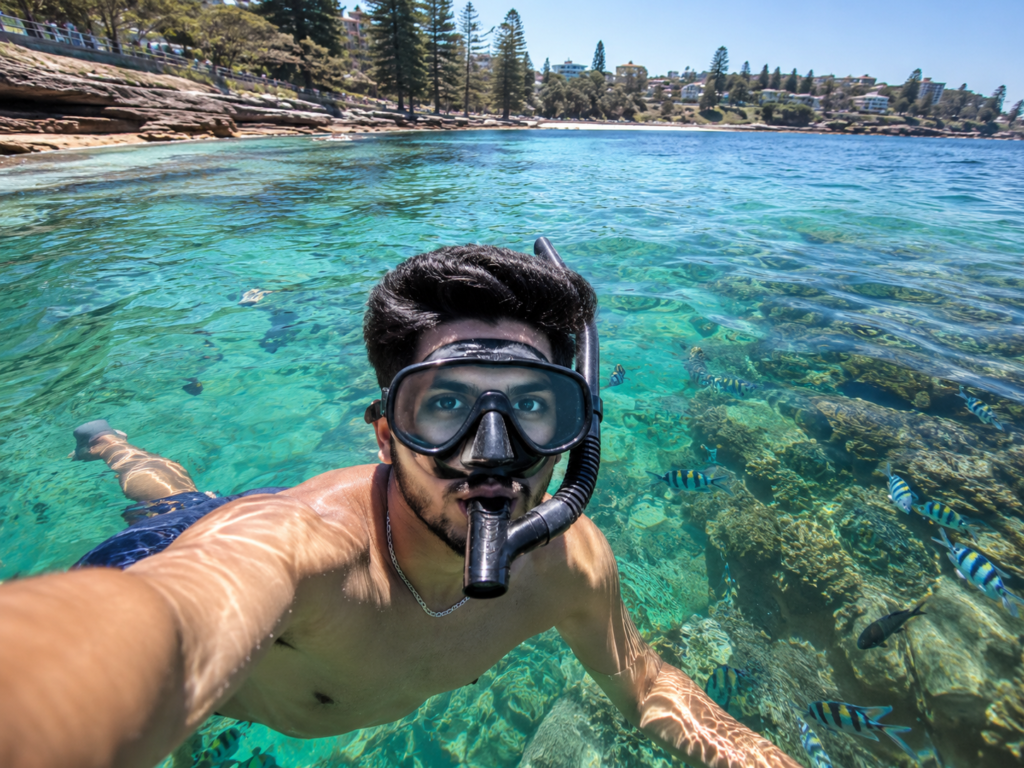
Snorkelling at Shelly Beach Sydney is one of the finest underwater experiences available anywhere in Australia within easy reach of a major city. While the world comes to Sydney for its ocean beaches and harbour views, a small community of divers, snorkellers, and marine life enthusiasts has long known that the waters off Shelly Beach in Manly contain an underwater world of extraordinary richness — one that most Sydney visitors walk straight past without any idea of what lies beneath the surface.
This complete guide to snorkelling at Shelly Beach Sydney covers everything you need to know to make the most of one of the city’s finest natural marine environments. From the best entry points and the species you will encounter, to the ideal conditions, what equipment to bring, and the insider knowledge that separates a good snorkel from an extraordinary one. Whether you are a complete beginner who has never put on a mask, or an experienced snorkeller looking for your next Sydney spot, Shelly Beach is the destination this guide exists to help you discover properly.
Why Snorkelling at Shelly Beach Sydney Is Special
Snorkelling at Shelly Beach Sydney is exceptional for reasons that go beyond a simple list of fish species. The specific combination of geography, water quality, marine reserve protection, and accessibility that exists at this location creates an underwater experience that is genuinely difficult to find elsewhere within reach of a city of five million people.
Shelly Beach sits at the southern end of the Manly peninsula, tucked into a sheltered cove that faces northwest rather than directly into the Pacific Ocean. This orientation means the beach and the waters immediately offshore are protected from the southerly and easterly swells that make ocean swimming difficult or impossible on the exposed eastern beaches for weeks at a time. At Shelly Beach, conditions are almost always calm enough to snorkel safely and comfortably even when Manly’s main ocean beach is closed for surf.
The Cabbage Tree Bay Aquatic Reserve, which encompasses the waters surrounding Shelly Beach, has been protected since 2002. This protection means that no fishing, no collection of marine life, and no disturbance of the underwater environment is permitted. The result, after more than two decades of protection, is a marine ecosystem of extraordinary health and richness. Fish that would be wary or absent in unprotected waters are here both numerous and genuinely unafraid of divers and snorkellers who approach respectfully. The blue gropers — large, brilliantly blue wrasse that are the signature species of the reserve — will approach swimmers out of curiosity rather than fleeing.
The water clarity at Shelly Beach Sydney is consistently among the best of any Sydney snorkelling location. The sheltered nature of the cove, combined with the absence of significant river inflow or industrial runoff, keeps the water clear for most of the year. On good days, visibility extends to 10 metres or more, allowing a level of underwater observation that is genuinely impressive.
The Marine Life: What You Will See Snorkelling at Shelly Beach Sydney
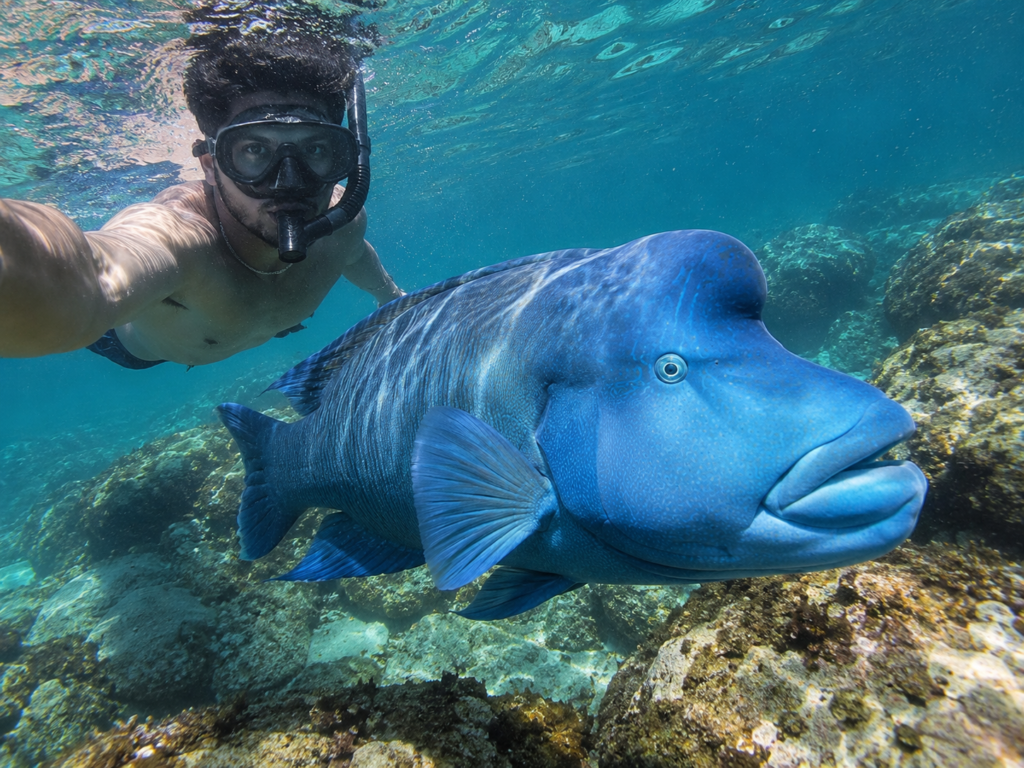
The marine life at Shelly Beach Sydney is the primary reason snorkellers return to this location repeatedly. The protected waters of the Cabbage Tree Bay Aquatic Reserve support a diversity and abundance of species that is remarkable for a location so close to a major urban centre.
Eastern Blue Groper — The Star of Shelly Beach
The eastern blue groper is the signature species of snorkelling at Shelly Beach Sydney and the encounter that most snorkellers remember long after the visit. These large, brilliantly coloured wrasse — electric blue in the adult males, greenish-brown in females and juveniles — can reach 60 centimetres in length and are among the most charismatic fish in Australian waters.
What makes blue gropers extraordinary at Shelly Beach is their behaviour. In unprotected waters, large fish learn quickly to avoid human divers. At Shelly Beach, where the fish have been protected for over twenty years and generations of blue gropers have grown up without experiencing any threat from humans, they approach snorkellers with genuine curiosity. It is common to have a large blue groper swim directly to you, hover at close range examining your mask, and follow you along the reef for several minutes before losing interest.
This behaviour — a large, wild animal choosing to approach rather than flee — is one of those natural experiences that produces an immediate and lasting shift in how you understand wild animal behaviour and the importance of marine protection. Seeing it for the first time while snorkelling at Shelly Beach Sydney tends to be genuinely moving.
Wobbegong Shark — The Camouflage Master
Wobbegong sharks are the species that produces the most dramatic reaction from first-time snorkellers at Shelly Beach Sydney — typically because they are almost impossible to see until you are very close to them. These flat, heavily patterned sharks lie motionless on sandy patches between rock formations, their extraordinary camouflage making them essentially invisible against the textured bottom.
The wobbegong shark found at Shelly Beach Sydney is the spotted wobbegong — a species that reaches approximately 1.2 metres and is entirely harmless to snorkellers who do not attempt to handle or provoke it. They are sit-and-wait predators that wait for small fish and crustaceans to wander within range rather than actively hunting.
Spotting a wobbegong at rest on the sandy bottom between reefs while snorkelling at Shelly Beach Sydney is one of the great moments of the experience. The combination of the animal’s extraordinary camouflage, its complete stillness, and the mild adrenaline of realising you are very close to a shark makes for an encounter that is genuinely memorable.
Cuttlefish — The Intelligent Shape-Shifters
Giant cuttlefish are regularly encountered while snorkelling at Shelly Beach Sydney, particularly in the rocky reef sections. These extraordinary molluscs — closely related to squid and octopus but typically larger and more visible — are capable of changing their colour, pattern, and skin texture almost instantaneously, a capability they use for both camouflage and communication.
Watching a cuttlefish change colour in real time while hovering above it in the clear water at Shelly Beach is one of those experiences that makes you genuinely reconsider the sophistication of animal intelligence. The patterns ripple across the body in complex sequences. Approach too closely and the animal will display a threat pattern — bright bands of colour pulsing along its mantle — before retreating by jet propulsion if the threat is not withdrawn.
Sea Dragons — The Rare Encounter
Weedy sea dragons are the rarest and most spectacular of the possible encounters while snorkelling at Shelly Beach Sydney. These extraordinary fish — relatives of seahorses but significantly larger, reaching 45 centimetres — are decorated with elaborate leaf-like appendages that provide camouflage in the kelp and seagrass beds where they live.
Sea dragons are not guaranteed sightings at Shelly Beach, but they are present in the reserve and sightings are reported regularly by snorkellers who know where to look. The eastern end of the bay, where seagrass beds provide suitable habitat, is the most likely location. Moving slowly, looking carefully at the base of kelp fronds rather than the open water, and exercising patience significantly increases the chances of a sea dragon encounter.
Other Species Commonly Encountered
Beyond the signature species, snorkelling at Shelly Beach Sydney regularly produces encounters with old wife fish — distinctly striped species that move in small schools through the reef formations. Luderick, also known as blackfish, graze on the algae covering the rocks in large, peaceful schools that part calmly around snorkellers. Footballer sweep — bold striped schooling fish — move through the reef in impressive numbers. Eastern blue-lined leatherjackets, sergeant baker, and various species of bream and wrasse are consistently present. At the base of the reef, banjo sharks rest on sandy patches beside the wobbegongs. In the open water column above the reef, large schools of yellowtail scad sometimes create the experience of swimming through a living cloud of fish.
The Best Entry Points for Snorkelling at Shelly Beach Sydney
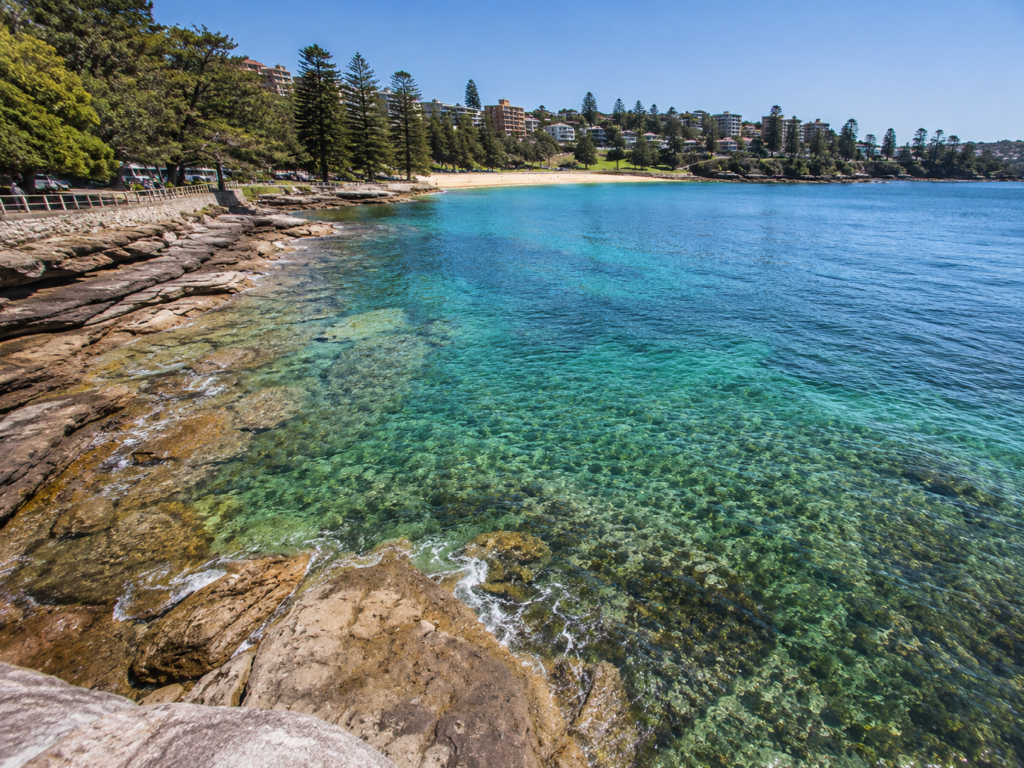
Snorkelling at Shelly Beach Sydney can be approached from several different entry points, each offering a different perspective on the marine environment and suited to different ability levels.
The Main Beach Entry — Best for Beginners
The main Shelly Beach itself provides the most straightforward entry for snorkelling at Shelly Beach Sydney. The beach slopes gently into the water without any significant rocks at the waterline, allowing confident walking in to waist depth before putting on fins and submerging. The bottom near the beach is sandy and gradually deepens, making this the most comfortable entry for beginners and for anyone carrying equipment.
From the main beach entry, snorkelling south toward the headland on the right side of the bay takes you over the reef formations where most of the marine life is concentrated. This route can be done at any tide and in most sea conditions given the protection of the cove.
The Headland Rocks — Best for Experienced Snorkellers
The rocks on the southern headland of Shelly Beach provide an alternative entry point that places experienced snorkellers directly over the richest reef sections without the swim across the sandy bay bottom from the main beach. Entry here requires negotiating the rocks at the water’s edge, which demands comfort and experience in rocky water entries.
The advantage of the headland entry is immediacy — the reef begins within metres of where you enter, and the concentration of marine life in this section is the highest anywhere in the bay. The blue gropers, wobbegongs, and sea dragons all favour the complex reef habitat of the southern headland.
The Northern Rock Shelf — The Hidden Snorkel Zone
The northern edge of Shelly Beach, where a low rock shelf extends into the water to the left of the main beach, is a third snorkelling zone that most visitors overlook entirely. This shallow rock shelf has a different character from the deeper southern reef — it is shallower, more exposed to light, and covered with a dense growth of algae and encrusting organisms that supports a different community of small fish and invertebrates.
Snorkelling over the northern shelf at Shelly Beach Sydney is particularly rewarding for those interested in the smaller and more cryptic marine life — the tiny wrasse species that dart between rocks, the nudibranchs on the rock surfaces, and the crabs and octopus that use the crevices. It is also the shallowest and most protected zone, making it ideal for complete beginners or for children doing their first snorkel.
Conditions and Timing: When to Go Snorkelling at Shelly Beach Sydney
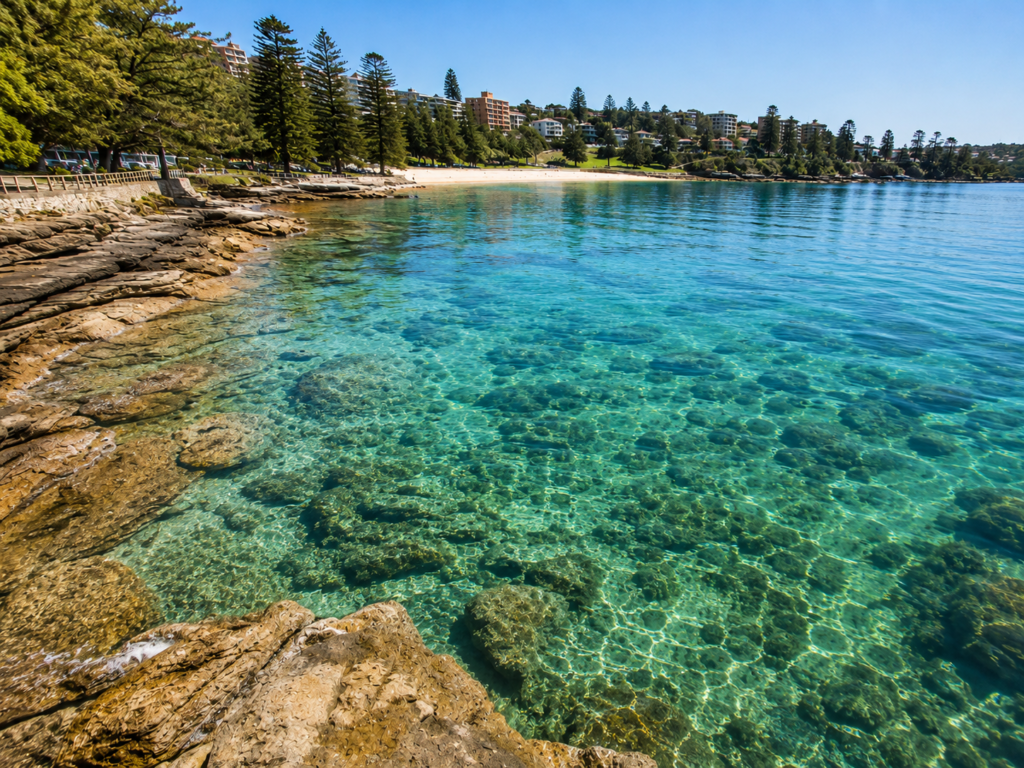
Getting the conditions right makes a significant difference to the snorkelling experience at Shelly Beach Sydney. The protected nature of the cove means that conditions are rarely too rough for safe snorkelling, but the visibility and the behaviour of the marine life both change significantly with conditions, time of day, and season.
Best Time of Day
Early morning is consistently the finest time for snorkelling at Shelly Beach Sydney. Between 7am and 10am, the water is at its clearest because no boat traffic, swimmer disturbance, or wind has yet disturbed the sediment. The light enters the water at a low angle in early morning, creating a warm, golden quality underwater that is both more beautiful and more revealing than the harsh overhead light of midday. The marine life is also most active in the early morning — blue gropers feeding on the reef, cuttlefish moving through the seagrass, and the large schools of fish at their most concentrated.
Avoid snorkelling at Shelly Beach Sydney in the middle of the day on summer weekends when the beach is at its most crowded. Hundreds of swimmers in the water simultaneously reduce visibility significantly through stirred sediment and create a less peaceful and more difficult snorkelling environment.
Late afternoon, particularly on weekdays, is the second-best window. The light is again at a low angle, the swimmer crowds have thinned, and the marine life is active in advance of the night period.
Best Season
Summer from December to February is the most popular season for snorkelling at Shelly Beach Sydney and offers the warmest water — typically 22 to 24 degrees Celsius — that allows extended snorkelling without a wetsuit for most adults. The long summer days provide the maximum window of good morning light. Water clarity in summer is generally excellent provided there has been no significant rainfall runoff event in the days before your visit.
Autumn from March to May is arguably the finest season overall for snorkelling at Shelly Beach Sydney. The water remains warm from summer — typically staying above 20 degrees into May — the crowds drop significantly after Easter, and the clarity is consistently excellent. The marine life is fully active and the giant cuttlefish are particularly visible in their breeding behaviour during this period.
Winter from June to August sees the water temperature drop to around 17 to 18 degrees Celsius, which requires a wetsuit for comfortable snorkelling for most people. The marine life does not disappear in winter — in fact, several species including weedy sea dragons are more reliably sighted in the cooler months. The clarity in winter is often the best of the year. For snorkellers willing to invest in a wetsuit or tolerate cooler water, winter snorkelling at Shelly Beach Sydney is genuinely outstanding.
Spring from September to November brings the water temperature back up, sees the arrival of spring breeding behaviour in several species, and provides the second peak of tourist season without the full summer crowds. An excellent and underappreciated time for snorkelling at Shelly Beach Sydney.
Checking Conditions Before You Go
Before any snorkelling session at Shelly Beach Sydney, check two things. First, the NSW Health Beachwatch website provides current water quality readings for Shelly Beach and surrounding Manly waters. Avoid snorkelling for 24 to 48 hours after significant rainfall as stormwater runoff can temporarily reduce clarity and affect water quality. Second, the Bureau of Meteorology surf forecast for the Sydney Northern Beaches gives the swell and wind conditions. A northerly or westerly wind creates the clearest conditions at Shelly Beach given its northwest-facing orientation. Southerly or easterly conditions, while still generally manageable, reduce clarity and can create some surface chop.
Equipment for Snorkelling at Shelly Beach Sydney
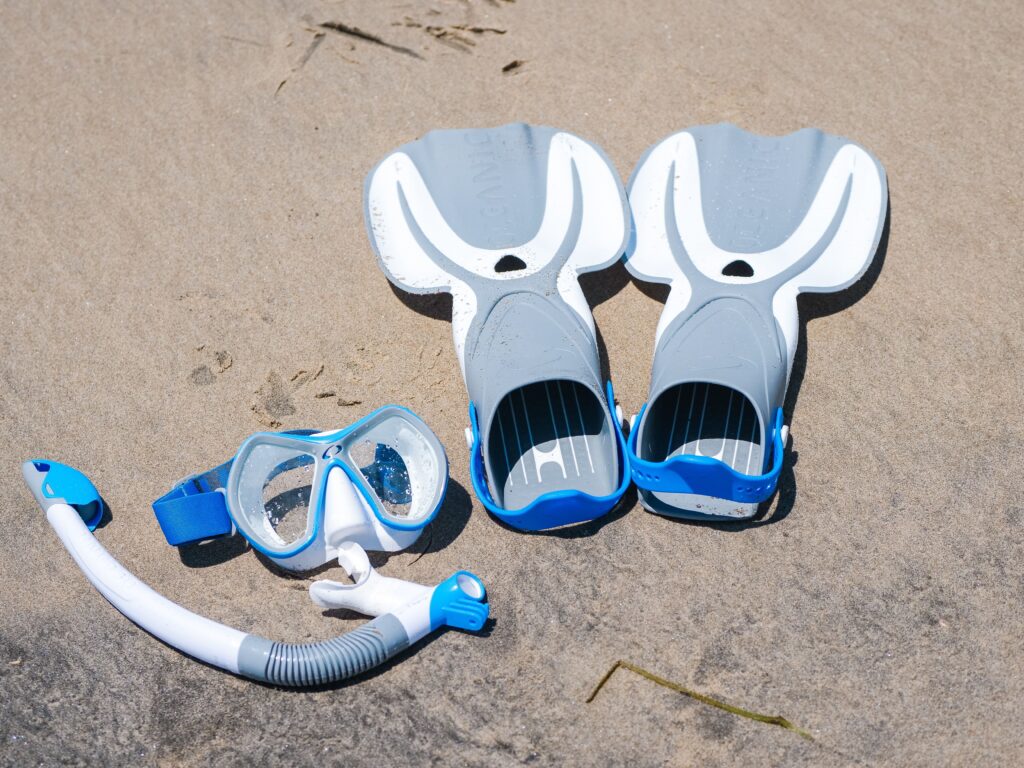
The right equipment makes an enormous difference to the snorkelling experience at Shelly Beach Sydney. Poorly fitted masks that leak constantly and fins that rub blisters transform a potentially extraordinary experience into an uncomfortable one.
Mask and Snorkel
A properly fitting mask is the single most important piece of equipment for snorkelling at Shelly Beach Sydney. The mask must create a complete seal against your face without requiring excessive strap tension to maintain it. To test the fit before purchasing, press the mask against your face without using the strap, inhale gently through your nose, and release. The mask should stay in place by suction for several seconds. If it falls away immediately, the seal is not adequate for your face shape.
The snorkel should have a comfortable mouthpiece that does not require significant jaw tension to hold, a splash guard at the top opening, and a purge valve at the bottom that allows easy clearing of water that enters the tube. Dry-top snorkels, which use a mechanism to prevent water entry when submerged, are useful for beginners who find clearing a flooded snorkel difficult, but are not necessary for confident swimmers.
Fins
Fins for snorkelling at Shelly Beach Sydney come in two basic types. Full-foot fins fit directly over a bare foot and are suitable for warm-water snorkelling where no bootie is worn. Open-heel fins use an adjustable heel strap and are designed to be worn over neoprene booties. For summer snorkelling at Shelly Beach without a wetsuit, full-foot fins in your correct shoe size are entirely adequate. For winter or wetsuit snorkelling, open-heel fins with a 3mm bootie provide better warmth and comfort.
Wetsuit
A wetsuit is not strictly necessary for snorkelling at Shelly Beach Sydney in summer when water temperatures are 22 to 24 degrees Celsius. Most adults can snorkel comfortably without a wetsuit for 30 to 60 minutes in these temperatures. For longer sessions, for cooler autumn and spring water, or for winter snorkelling, a 3mm full suit significantly extends comfortable time in the water and provides protection against the occasional jellyfish presence in the warmer months.
Hiring Equipment at Manly
For visitors to Sydney who do not own snorkelling equipment, several hire operations in Manly provide everything needed for snorkelling at Shelly Beach Sydney. Manly Surf School and several dive shops on the main Manly beach strip hire masks, snorkels, fins, and wetsuits at reasonable daily rates. Equipment quality at the better operators is good. Booking in advance for summer weekends is strongly recommended.
Getting to Shelly Beach Sydney for Snorkelling
Getting to Shelly Beach Sydney for snorkelling is one of the many pleasures of this destination. The combination of the Manly Ferry crossing and the short walk from Manly to Shelly Beach makes the journey itself part of the experience.
The Manly Ferry Route — The Recommended Approach
The Manly Ferry from Circular Quay is the most enjoyable approach to snorkelling at Shelly Beach Sydney and one of the finest ferry crossings in the world. The 30-minute crossing departs from Wharf 3 at Circular Quay and passes under the Harbour Bridge, through the inner harbour, and out through the Sydney Heads — providing extraordinary views of the harbour, the Heads, and the Pacific Ocean that no other form of transport to Manly can replicate.
The ferry arrives at Manly Wharf on the harbour side of the peninsula. From the wharf, Shelly Beach is a 15-minute walk through the Manly shopping village across the peninsula to the ocean side, then south along the footpath to the sheltered cove. The walk passes through the pleasant Manly village strip and the ocean beach promenade — both enjoyable in the morning light before the crowds arrive.
By Car
Driving to Shelly Beach Sydney for snorkelling is straightforward but parking on summer weekends requires patience. The Shelly Beach car park at the end of Bower Street, Manly has limited spaces that fill very quickly on sunny weekend mornings. Arriving before 8am guarantees a parking spot. Later arrivals should use the larger public car parks on Manly’s main strip and walk the 15 minutes to Shelly Beach.
From Sydney CBD the drive takes approximately 30 to 40 minutes via the Spit Bridge and Manly Road.
Rules and Etiquette at Shelly Beach Sydney
Snorkelling at Shelly Beach Sydney within the Cabbage Tree Bay Aquatic Reserve comes with specific rules and expectations of behaviour that all visitors must respect.
The Cabbage Tree Bay Aquatic Reserve prohibits the collection of any marine organism, the use of spearguns, and any interference with the marine environment. This includes picking up shells, disturbing animals, or touching the reef surface. These rules apply to everyone regardless of the purpose of their visit.
Beyond the legal requirements, responsible snorkelling at Shelly Beach Sydney follows a simple set of behavioural guidelines that protect both the marine environment and the quality of the experience for all visitors.
Do not chase, corner, or attempt to touch marine animals. The blue gropers and other species that approach you are doing so voluntarily — any attempt to pursue them immediately ends the encounter and teaches the animal to be warier of future visitors. The extraordinary behaviour of these animals exists because generations of snorkellers before you have interacted with them respectfully. Maintain that behaviour.
Avoid touching the reef surface or standing on rock formations. Even a single contact kills the living organisms on reef surfaces and the cumulative effect of many visitors touching the same areas destroys the reef communities that make the snorkelling at Shelly Beach Sydney worthwhile. Maintain positive buoyancy and avoid finning near the bottom where sediment disturbance reduces visibility.
Do not feed the fish. Feeding marine animals disrupts their natural behaviour, creates dependency on human visitors, and can cause health problems for species whose natural diet is disrupted by the wrong food. The extraordinary tameness of the blue gropers at Shelly Beach comes from protection, not from feeding — maintain it by not starting.
Snorkelling Shelly Beach Sydney With Children
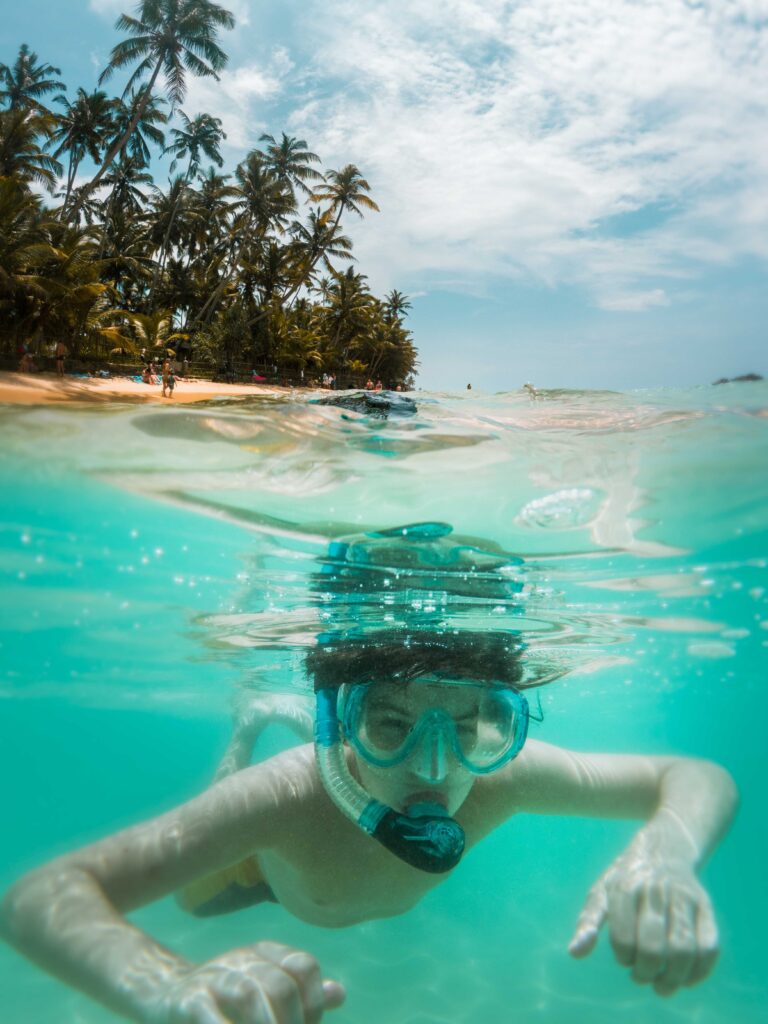
Shelly Beach Sydney is one of the finest snorkelling locations in Australia for introducing children to the underwater world. The protected cove, the calm water, the shallow northern shelf, and the abundance and tameness of the marine life combine to create an environment that is simultaneously safe and genuinely exciting for young snorkellers.
Children from approximately 6 years old can snorkel safely at Shelly Beach Sydney with close adult supervision in the shallower sections of the cove. The northern rock shelf, where the depth rarely exceeds 1.5 metres, is ideal for children doing their first snorkel — shallow enough to stand up easily, calm enough to practice without anxiety, and full enough of small fish and invertebrates to maintain genuine engagement.
Equipment for children at Shelly Beach Sydney must fit correctly. Children’s masks that leak constantly make the experience miserable. Take time at the hire shop or before purchasing to ensure the mask seals properly on the child’s smaller face. Many children find full-face snorkel masks easier to use initially than traditional separate mask and snorkel — these allow nose breathing and eliminate the mouthpiece technique that some children find difficult.
The blue groper encounter is typically the highlight for children snorkelling at Shelly Beach Sydney. Being approached by a large, brilliantly blue fish that shows genuine curiosity in the child rather than fleeing is the kind of wildlife experience that creates lasting memories. Parents who help children remain calm and still when a groper approaches — rather than encouraging excited splashing that chases it away — are rewarded with encounters that last several minutes and produce genuine wonder.
What Else to Do at Shelly Beach Sydney
Snorkelling at Shelly Beach Sydney sits within a broader Manly experience that fills a full and excellent day without any need to go elsewhere.
After your snorkel, the Boathouse Restaurant directly above the beach at Shelly Beach has been a Manly institution since the 1920s and provides an excellent breakfast or lunch with direct views over the cove. Sitting on the Boathouse terrace with coffee, watching the water you have just snorkelled through, is one of those Sydney experiences that justifies every effort of getting there.
The Manly Scenic Walkway, accessible from the northern end of Shelly Beach via the track past the rock pools, runs along the harbour side of the northern beaches through Sydney Harbour National Park to Manly Wharf. The walk takes approximately 90 minutes and provides continuous harbour and headland views that are extraordinary in the morning light. Combining a Shelly Beach snorkel with the Manly Scenic Walkway makes one of Sydney’s finest half-day experiences.
Manly’s main ocean beach, a 15-minute walk north from Shelly Beach across the peninsula, is excellent for post-snorkel swimming in the surf if conditions allow. The contrast between the calm, marine-life-rich water at Shelly Beach and the open Pacific swell at Manly Beach makes the peninsula experience feel remarkably varied for such a short distance.
Frequently Asked Questions About Snorkelling at Shelly Beach Sydney
Is snorkelling at Shelly Beach Sydney suitable for complete beginners?
Shelly Beach Sydney is one of the finest locations in Australia for beginner snorkellers. The protected cove provides calm, flat water in almost all conditions. The gradual sandy entry from the main beach allows comfortable wading to swimming depth before submerging. The shallow northern shelf section has a maximum depth of approximately 1.5 metres — comfortable for complete beginners who want to be able to stand up easily. The marine life is so abundant and approachable that even a beginner who spends most of their time near the surface rather than diving down will encounter blue gropers, schools of fish, and the other signature species. There is no location in the greater Sydney area that combines accessibility, safety, and marine life quality for beginners as effectively as Shelly Beach Sydney.
Do I need my own equipment to snorkel at Shelly Beach Sydney?
Own equipment is ideal but not necessary. Hire equipment is available at several operators in Manly — Manly Surf School and the dive shops on the main beach strip are the most established options. Expect to pay approximately 30 to 50 Australian dollars for a full equipment hire including mask, snorkel, fins, and wetsuit for the day. Quality varies between operators — if the hired mask does not seal properly, ask to try a different size or model before accepting it. For families who plan to snorkel at Shelly Beach more than once, purchasing basic equipment is cost-effective after two or three hire visits.
Is there an entry fee for snorkelling at Shelly Beach Sydney?
No entry fee applies to snorkelling at Shelly Beach Sydney. The beach and the Cabbage Tree Bay Aquatic Reserve are publicly accessible at no cost. Parking fees apply in the Shelly Beach car park. The Manly Ferry from Circular Quay is covered by standard Opal card fare or a purchased ticket. Equipment hire is a separate cost if you do not own your own gear.
What is the water temperature for snorkelling at Shelly Beach Sydney?
Water temperature at Shelly Beach Sydney varies seasonally. Summer — December to February — sees temperatures of 22 to 24 degrees Celsius, comfortable for snorkelling without a wetsuit for most adults. Autumn — March to May — maintains warm water above 20 degrees into late autumn. Winter — June to August — drops to 17 to 18 degrees, which most adults find uncomfortable without a wetsuit for sessions longer than 15 to 20 minutes. Spring — September to November — returns from 18 degrees back toward summer temperatures. A 3mm full wetsuit provides comfortable protection at temperatures below 20 degrees and allows significantly extended snorkelling time at any temperature.
Are there any dangers to be aware of when snorkelling at Shelly Beach Sydney?
Snorkelling at Shelly Beach Sydney is genuinely low-risk compared to ocean snorkelling environments. The protected cove eliminates the surf, rip, and strong current hazards that make some Sydney ocean locations difficult. The primary hazards specific to Shelly Beach are the entry and exit on the southern headland rocks, which require care in all but the calmest conditions. Blue-ringed octopus, which carry a potentially lethal venom, are present in the reserve — their brilliant blue rings are displayed when they feel threatened, and the simple rule of never touching any octopus or reaching into rock crevices eliminates any practical risk. Stingers including bluebottles and jellyfish are occasionally present in warmer months — a wetsuit provides complete protection. Wobbegong sharks present absolutely no threat to snorkellers who do not attempt to handle them.
Final Thoughts: Snorkelling at Shelly Beach Sydney
Snorkelling at Shelly Beach Sydney is one of those experiences that consistently produces genuine surprise — not because Sydney is not already known for natural beauty, but because the specific quality of the underwater encounter here exceeds the expectation of most visitors who have never thought of Sydney as a snorkelling destination.
The blue groper that approaches your mask with genuine curiosity. The wobbegong lying invisible on the sand until you are almost above it. The cuttlefish shifting colour in real time three metres below you in clear water. The school of yellowtail scad parting around you as you hover in the water column above the reef.
These are not experiences that require travelling to a tropical reef system. They are available on a regular ferry from Circular Quay, within thirty minutes of the Sydney CBD, at a beach that is free to access and that can be reached and explored on a morning that still leaves the afternoon free.
Snorkelling at Shelly Beach Sydney rewards everyone who tries it. Go early. Go slowly. Look carefully.
The underwater world at Shelly Beach has been there the whole time. It has been waiting for exactly this kind of attention.
Have you snorkelled at Shelly Beach Sydney? Share your experience in the comments — we would love to hear about your blue groper encounters and your favourite moments in the water.
Related Articles:
- Best Swimming Holes Near Sydney
- Best Rock Pools in Cronulla Sydney
- Kyeemagh Beach Sydney: Complete Local Guide
Sydney Hidden Gems – uncovering what makes Sydney extraordinary, one underwater discovery at a time.